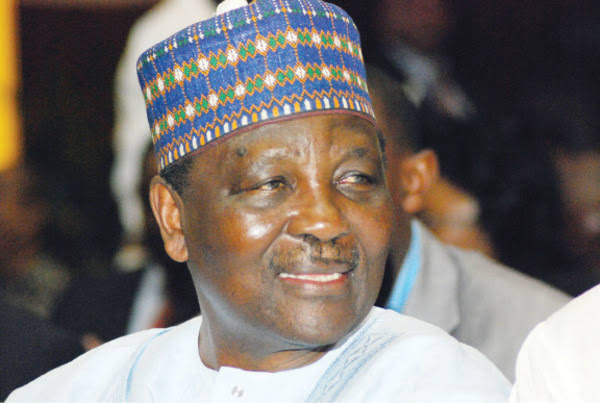
Photo: General Yakubu Gowon
By: Daniel Kanu
When, recently, former military leader, General Yakubu Gowon emerged from a meeting with President Bola Ahmed Tinubu at the Presidential Villa and declared that the government was “doing the best it can all round,” many Nigerians were left stunned—not because of political disagreement, but because of the sheer disconnect between those words and the lived reality across the country.
This was not just another comment from a retired leader. Gowon is no ordinary elder; he is a man whose voice carries historical weight, not only in Nigeria but beyond. Particularly, also in the Middle Belt, his region, an area now synonymous with bloodshed and abandonment.
His remarks, therefore, were not merely disappointing—they were deeply troubling.
Unarguably, across Nigeria, insecurity has metastasized into a national crisis. From banditry in the North-West to insurgency in the North-East, and most painfully, the relentless killings in the Middle Belt—especially in Plateau State—communities are under siege.
Villages are razed, families displaced, and farmlands turned into killing fields. For many, survival has become a daily gamble.
Against this grim backdrop, Gowon’s assertion that there is “no particular area” needing improvement sounds less like optimism and more like denial.
It is a statement that risks trivializing the anguish of thousands who have lost loved ones, homes, and livelihoods. If this is what passes for “the best,” then the question becomes: what does failure look like?
An elder statesman’s role is not to flatter power but to speak truth to it, challenge it—especially in moments of national distress.
Gowon had a rare opportunity: a private audience with the President at a time when Nigeria is grappling with hunger, inflation, and widespread insecurity.
That moment demanded candour, not comfort; truth, not praise.
One must ask: what purpose is served by shielding the President from the harsh realities Nigerians face daily?
Leadership thrives on honest feedback, not curated applause. By choosing to endorse rather than interrogate the government’s performance, Gowon missed an opportunity to speak not just as a former Head of State, but as a moral voice for a nation in deep pain.
The Middle Belt, Gowon’s own geopolitical home, is bleeding. Entire communities in Plateau and neighbouring states live in fear, often abandoned to their fate. If anyone should be amplifying their cries at the highest levels of power, it should be figures like Gowon—leaders whose legacy is intertwined with Nigeria’s unity and survival.
Moreover, the economic hardship across the country is undeniable. Food prices have soared beyond the reach of ordinary citizens. The cost of living continues to rise while wages stagnate.
Hunger is no longer a distant threat; it is an immediate and daily reality for millions. To suggest that all is well—or even tolerably managed—is to ignore the visible suffering etched into the faces of Nigerians.
Gowon’s comments raise uncomfortable but necessary questions. What is the responsibility of those who once held power? Is it to protect the image of the current administration, or to protect the people?
At this stage in his life, Gowon has little to gain politically and everything to offer morally. That is precisely why his words matter—and why they must reflect truth.
Nigeria does not need polite reassurances; it needs courageous honesty. It needs voices that will tell leaders, without fear or favour, that the nation is hurting, that policies are failing, and that urgent course correction is required.
History will not judge Gowon by how well he praised those in power, but by whether he stood for truth when it mattered most. On this occasion, he fell short.
And in times like these, silence—or worse, flattery—is not neutrality. It is complicity.