Communities, activists reject Lagos prepaid water meters

Photo: Activists, stakeholders at the symposium By Mandy Park Residents of some communities in Lagos State, alongside activists and labour leaders, have rejected the state government’s prepaid water metering scheme, warning that it could make access to clean water dependent on people’s ability to pay. They called on the government to invest in public water infrastructure and guarantee affordable access to safe and reliable water instead of introducing a system that disconnects households when their prepaid credits are exhausted. The stakeholders made their position known at a symposium organised by…

Read More

World Food Day 2026: CAPPA Urges Nigeria to Put Nutrition at Centre of Food Security

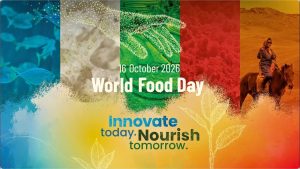
Photo: World Food Day Logo By: Mandy Park Corporate Accountability and Public Participation Africa (CAPPA) has called on the Federal Government to prioritise affordability, nutrition and stronger protections against unhealthy food environments in Nigeria’s food security agenda. In a statement to mark World Food Day 2026, themed “Innovate today. Nourish tomorrow,” CAPPA noted that Nigeria’s food production index has climbed steadily over the years, with the country becoming the leading producer of cassava, and a top-tier yam and sorghum producer, among other food staples. Ironically, massive post-harvest losses, insecurity in…

Read More

OWORAC rejects water privatisation, prepaid meters, warns of exclusion

By Daniel Kanu The Our Water, Our Right Africa Coalition has rejected water privatisation and prepaid metering systems, warning that commercialising water services could deny poor and vulnerable households access to an essential human right. The coalition called on African governments to prioritise publicly funded water supply systems, improve access to safe and affordable drinking water, and strengthen public institutions responsible for water delivery. It made the call during the 2026 Africa Week of Action Against Privatisation, held in Lagos, with the theme, “Reclaiming Africa’s Water Future: Public Water for…

Read More

OPINION: CETA Amendment Bill: A Tax for Good Health

Photo: Robert Egbe By Robert Egbe Something strange happened to Enugu-based paediatrician, Dr. Chiwetalu Odoh, last Christmas eve. Summoned to the Children’s Emergency Unit at the hospital in Enugu, he expected to meet a critically ill child. Instead, he found a little girl, her mother and her aunt, seated quietly in the waiting area. At first glance, she appeared to be healthy. But the night before – between bedtime and that morning – the child drank over 17 sachets of water. She repeatedly woke to urinate. Her aunt, a nurse,…

Read More

OPINION:  The $700bn Question: Is Nigeria Trading Resources for Dependency?

Photo: Olamide Martins Ogunlade By Olamide Martins Ogunlade Nigeria’s new mineral-investment framework with the United States has been presented as an opportunity to unlock an estimated $700 billion in mineral resources and move the country beyond the export of raw materials. On September 24, 2026, on the sidelines of the ongoing United Nations General Assembly in New York City, Nigeria’s Minister of Solid Minerals Development, Dele Alake, and U.S. Deputy Secretary of State Christopher Landau signed the framework. It focuses on geological data and exploration, mineral development and processing, infrastructure,…

Read More

Alcohol abuse damages kidney, liver says Prof Adeyeye, NAFDAC Boss

Director General, NAFDAC, Prof. Mojisola Christianah Adeyeye By Mandy Park The National Agency for Food and Drug Administration and Control has raised fresh concerns over the dangers associated with excessive alcohol consumption, warning that prolonged abuse can cause serious damage to vital organs, particularly the kidneys and liver. NAFDAC also linked alcohol abuse to wider social and security challenges, warning that excessive drinking can contribute to behaviours that encourage violence and criminal activities, including banditry. The agency’s warning comes amid growing concerns over the accessibility and consumption of alcoholic beverages in Nigeria, particularly…

Read More

OPINION:  Ultra-processed Foods Fortification: Public Health Solution or Health Risk?

Photo: Humphrey Ukeaja By Humphrey Ukeaja Over the past few years, a growing number of food manufacturers, health advocates, and sections of the media have increasingly presented the fortification of ultra-processed products such as bouillon cubes, noodles, sugary beverages, and pre-packaged snacks as a public health response to curb the hidden hunger crisis. Fortification is the practice of adding essential vitamins and minerals to staple foods during production to prevent health problems caused by nutrient deficiencies and the health problems they cause. Advocates now propose extending this intervention to industrially…

Read More

OPINION
Hypertension: Case for Sodium Consumption Regulation, Healthier Diets

Photo: Prof Pate, Health Minister By: Esi-ife Arogundade World Hypertension Day is observed annually in May, serving as a reminder of the importance of blood pressure awareness and management. This global health initiative carries even more significance as the world continues to adapt to lifestyle changes, rising stress levels, and an increasing prevalence of hypertension. Hypertension, also known as high blood pressure, is a medical condition when the blood pressure in the blood vessels is continuously elevated. The more blood your heart pumps and the narrower your blood vessels, the…

Read More

Hello World, Goodbye Health: Curbing Big Soda’s Sportswashing At Olympics

By Robert Egbe On October 16, 2021, the Executive Board (EB) of the International Olympic Committee (IOC) endorsed the Olympism 365 strategy which aims to strengthen the role of sport as an enabler for the United Nations (UN) Sustainable Development Goals (SDGs). Through Olympism 365, the IOC, working with partners, uses sport to among others, help improve people’s physical and mental health and well-being.But just before the Paris 2024 Olympics kicked off in France, the IOC teamed up with Big Soda to do the reverse: promote products known to damage…

Read More

Over Consumption of Salt: Time To Act Is Now

By Olukemi Bukola Nigeria records an estimated daily salt consumption reaching up to 5.8grams per day, dangerously exceeding the World Health Organization’s (WHO) recommended limit of 2 grams of sodium per day or less than 5 grams of salt per day, which is equivalent to just one teaspoon of salt daily. This alarming statistic is not surprising given the significant changes in the Nigerian diet. The influx of processed foods and seasonings loaded with high sodium on local market shelves and the growth of unhealthy fast food outlets has led…

Read More