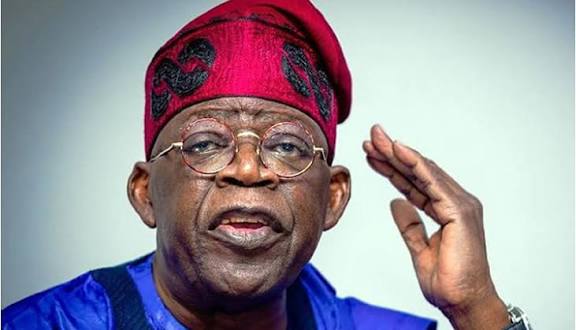
Photo: President Bola Tinubu
By Daniel Kanu
The Presidency has clarified that a combination of scheduling pressures and logistical constraints necessitated President Bola Ahmed Tinubu’s decision to meet victims of the recent Plateau attacks at the Jos airport rather than in the city centre.
In a statement issued by his Special Adviser on Information and Strategy, Bayo Onanuga, the State House disclosed that the President had initially planned to receive Mahamat Idriss Déby Itno in Abuja before proceeding to Ogun State for an official engagement.
However, following a detailed security briefing from Plateau State Governor Caleb Mutfwang, Tinubu cancelled the Ogun visit and instead scheduled an urgent trip to Jos to assess the situation firsthand.
The bilateral meeting with the Chadian leader, which focused on strengthening regional security cooperation, reportedly ran longer than expected, delaying the President’s departure.
The Presidency further explained that operational challenges at the Jos airport also influenced the decision.
The runway, it noted, lacks the necessary navigational aids for night landings, while the journey from the airport to the city centre takes about 40 minutes.
Given the limited daylight window, officials determined that travelling into town and returning safely before dusk would not be feasible.
Consequently, victims and community representatives were brought to a facility near the airport, where the President held an interactive session with them.
Present at the meeting were top security officials, including the Minister of Defence, the Chief of Army Staff, and the Inspector-General of Police, who had earlier visited Rukuba—identified as one of the worst-hit areas of the violence.
According to the statement, a high-powered federal delegation had been deployed ahead of the President’s visit to evaluate the security situation and engage directly with affected communities.
During the meeting, Tinubu commiserated with victims, listened to their accounts, and outlined measures being taken by the Federal Government to restore peace.
He reaffirmed his administration’s commitment to justice, promising that perpetrators would be apprehended and prosecuted.
As part of immediate interventions, the President announced plans to deploy 5,000 AI-powered surveillance cameras across Plateau State to enhance intelligence gathering and strengthen security response.
He also invited community leaders to Abuja for further dialogue aimed at addressing the root causes of the recurring crisis.
The Presidency described the visit as a focused intervention designed to fast-track engagement with key stakeholders and reinforce ongoing security operations in the state.
Plateau State has, for years, grappled with cycles of violence often linked to complex factors such as farmer-herder conflicts, ethnic tensions, land disputes, and reprisals.
Analysts say sustained peace will require not only security deployments but also long-term political, economic, and community-based solutions.
Recent federal efforts have included increased military presence, intelligence-driven operations, and collaboration with neighbouring countries to curb cross-border threats.
The government has also reiterated its commitment to supporting displaced persons and rebuilding affected communities as part of broader peacebuilding initiatives.