By: Daniel Kanu
The presidential candidate of the Nigeria Democratic Congress (NDC) in the 2027 general election, Peter Obi, has said Nigeria can become a prosperous, secure and globally competitive nation if its leaders prioritise production, accountability and investment in human capital.
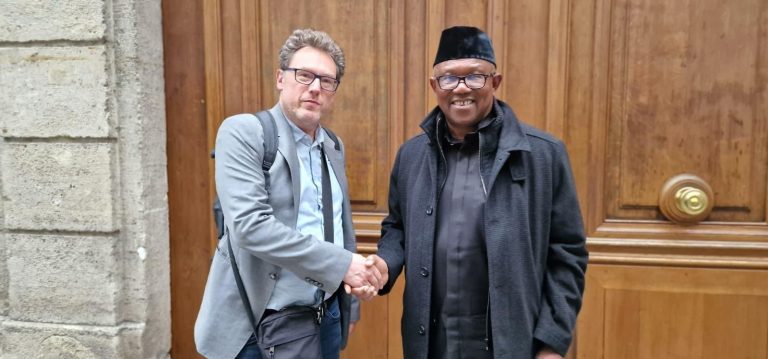
Obi stated this after participating in a roundtable discussion at the Paris office of the European Council on Foreign Relations, where policymakers, diplomats, development experts and international media representatives discussed Nigeria’s development prospects and its role in the global community.
The former Anambra State governor, in a statement shared on his official X account, said Nigeria had the human and natural resources required to achieve sustainable development but needed a fundamental shift in its leadership approach and economic priorities.
He argued that the country’s challenges were not primarily caused by a lack of resources but by inadequate leadership, poor accountability and the failure to harness its enormous potential for productive economic activities.
Obi said the discussions at the roundtable centred on development cooperation and strengthening bilateral partnerships to accelerate economic growth, improve living standards and create opportunities for Nigerians.
“Our discussions focused on development cooperation and the need to strengthen bilateral partnerships that can accelerate economic growth, improve the lives of our people, create productive opportunities, and support sustainable national development,” he said.
The former governor stressed that Nigeria must move away from an economy driven largely by consumption and imports to one that prioritised domestic production, industrialisation and enterprise.
According to him, the country’s prospects remain encouraging, but translating its potential into tangible benefits for citizens requires deliberate policy choices and effective leadership.
“ We must move from consumption to production, from poverty to prosperity, and from wasted potential to shared progress,” Obi stated.
He maintained that sustainable national development could not be achieved without prioritising investment in education, healthcare, human capital development and productive businesses.
Obi also called for stronger institutions, adherence to the rule of law and fiscal discipline, arguing that these were essential to restoring public confidence and building an economy capable of delivering prosperity to citizens.
He warned against a political culture that prioritised consumption over productive investment, insisting that government policies should create the conditions for businesses to thrive, jobs to grow and households to enjoy improved living standards.
The NDC presidential candidate further emphasised the importance of mutually beneficial international partnerships, saying cooperation with foreign governments and development institutions could help accelerate Nigeria’s economic transformation.
However, he stressed that such partnerships must support domestic development objectives and improve the welfare of Nigerians.
Obi expressed optimism that Nigeria could regain its standing among nations if its leaders embraced responsible governance, productive economic policies and a commitment to the common good.
Nigeria has continued to grapple with economic pressures, including rising living costs, unemployment, infrastructure deficits and concerns about the purchasing power of households.
These challenges have intensified calls for policies that encourage domestic production, expand employment opportunities and reduce dependence on imported goods.
Although successive administrations have introduced measures aimed at stimulating local production and diversifying the economy, concerns remain about the pace of industrial growth, the cost of doing business and the ability of many Nigerians to cope with prevailing economic conditions.
Obi has consistently advocated prudent public spending, investment in education and healthcare, and a shift towards production as key elements of his economic vision.
His participation in the Paris roundtable forms part of his engagement with international stakeholders ahead of the 2027 presidential election, as political parties and prospective candidates begin positioning themselves for the contest.
The NDC candidate said Nigeria’s abundant resources could translate into shared prosperity if the country adopted policies that promoted accountability, strengthened institutions and placed the welfare of citizens at the centre of governance.
He expressed confidence that with competent leadership and sound economic management, Nigeria could build a more secure, productive and prosperous future.