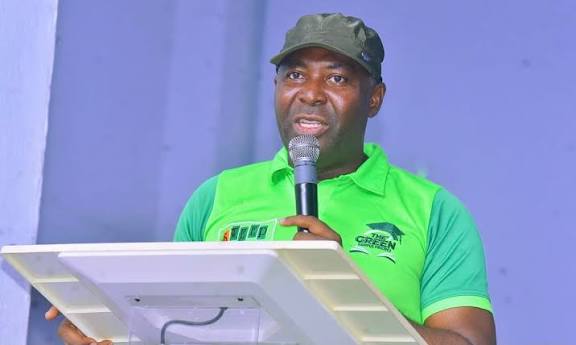
Photo: Amb. Obuesi Phillips
By: Amb. Obuesi Phillips
As the economic hub of Nigeria, Lagos is facing a growing crisis that threatens to undermine its very existence. With a rapidly increasing population of over 25 million people and limited land mass, the city is grappling with the challenge of managing its municipal solid waste. If left unchecked, the consequences will be catastrophic, destroying the city’s megacity status and posing serious health risks to its inhabitants.
The improper disposal of waste in Lagos has severe consequences for the environment, public health, and the economy. Uncollected waste litters the streets, clogging drains and causing flooding, which in turn leads to the spread of diseases like cholera, malaria, and typhoid. The situation is further exacerbated by the fact that many residents lack access to proper waste disposal facilities, leading to the proliferation of open dumps and landfills.
However, we know that waste is both a challenge and an opportunity. There are immense prospects for innovation and entrepreneurship in waste valorization. In recent years, there has been a growing trend of grassroots dwellers sourcing livelihoods from waste collection and recycling. This not only provides a source of income for many but also helps to reduce the amount of waste that ends up in dumpsites.
To address the waste management crisis in Lagos and other Nigerian cities, there is a pressing need for the government to unbundle waste collection and disposal and allow private and independent participation in the establishment of small holder modular waste refineries. These refineries would convert waste into valuable resources such as fertilizer, biogas, and energy, reducing the amount of waste sent to landfills and creating jobs and stimulating local economies.
The benefits of small holder modular waste refineries are numerous. They include:
– Reduced greenhouse gas emissions and environmental pollution
– Creation of jobs and stimulation of local economies
– Production of valuable resources such as fertilizer and energy
– Improved public health and sanitation
– Enhanced environmental sustainability
The government must step away from the present system of “waste logistics” which simply collects and transports waste from homes to dumpsites, that is not waste management. Small holder modular waste refineries offer a better and more sustainable solution to waste management, and it is our collective responsibility to support and invest in this innovative approach.
Together, we can create a cleaner, healthier, and more sustainable environment for future generations.
Amb. Obuesi Phillips
President, Lagos Waste Forum