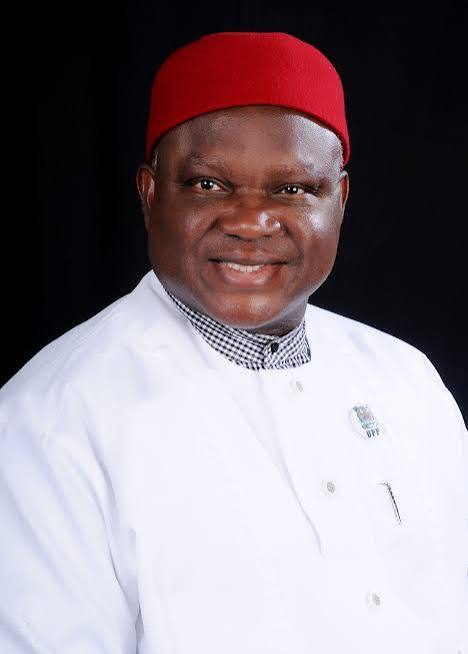
Photo: Chief Chekwas Okorie
By Daniel Kanu
Veteran politician and founder of the All Progressives Grand Alliance, APGA, Chief Chekwas Okorie, has raised alarm over what he described as the growing disengagement of Ndigbo from Nigeria’s political and national life, warning that the trend poses serious risks to the country’s stability.
Speaking in a no-holds-barred interview with Nigeria News Mark, Okorie said the situation informed his decision to champion the “Igbo Agenda Project,” a socio-political initiative aimed at reawakening political consciousness among Ndigbo and promoting inclusion, equity, and development.
He described the apparent withdrawal of the South-East from key national activities, including elections and public service engagement, as “an ominous sign,” noting that millions of registered voters in the region seem to be no more interested in political participation and future elections.
According to him, “where you have a people as vibrant and enterprising as the Igbo, yet they are reluctant to participate in police recruitment, military service, and even democratic processes, it signals a deeper problem that must be urgently addressed.”
Okorie cited electoral data from the Independent National Electoral Commission (INEC), noting that out of over 11 million registered voters in the South-East in 2023, only about 2.2 million participated in the presidential election.
“This level of apathy is dangerous. It reflects frustration, alienation, and a loss of faith in the Nigerian project,” he said.
The elder statesman emphasized that the Igbo Agenda Project is non-partisan and rooted in dialogue rather than confrontation. He explained that the initiative seeks to mobilize Igbo communities across Nigeria and the diaspora through town hall meetings, consultations, and a planned political summit.
He disclosed that the process would culminate in the articulation of a political charter to guide the aspirations of the South-East ahead of future elections.
“We want to build consensus across town unions, market associations, youth and women groups, and professionals. The aim is to restore political participation and ensure that Ndigbo are not sidelined in national affairs,” he stated.
Okorie, who said he had stepped away from partisan politics to focus on the project, described the effort as his “last service” to the Igbo people and Nigeria, given his age and long-standing involvement in political advocacy.
On national politics, Okorie expressed concern over alleged attempts to weaken opposition forces ahead of the 2027 elections, particularly in relation to Peter Obi.
He alleged that Obi, whom he described as Nigeria’s most visible opposition figure, had been under sustained political pressure since the 2023 elections.
While urging caution, Okorie warned that any move perceived as targeting Obi could trigger widespread unrest.
“Nigerians are already under severe economic pressure. Any action that appears to undermine democracy or silence opposition voices could have serious consequences,” he cautioned.
He also called on President Bola Ahmed Tinubu to rein in his aides and ensure that political discourse remains issue-based rather than inflammatory.
Reflecting on the current administration, Okorie said he was disappointed with Tinubu’s handling of Nigeria’s diversity, despite the President’s pro-democracy credentials.
He argued that ethnic divisions had deepened under the present government, warning that rebuilding national unity would be a daunting task for any future administration.
“Many Nigerians no longer believe in the country. The level of ethnic consciousness today is alarming. We should be talking about Nigeria, not constantly reverting to ethnic identities,” he said.
Okorie maintained that the Igbo Agenda Project is ultimately about securing fairness, inclusion, and equal opportunities for the South-East within Nigeria.
He stressed that the region’s demographic strength and economic contributions make its marginalisation untenable.
“No group with such population, spread, and enterprise can afford to remain politically irrelevant. What we seek is a Nigeria where every region, including the South-East, has a fair stake in leadership and development,” he added.