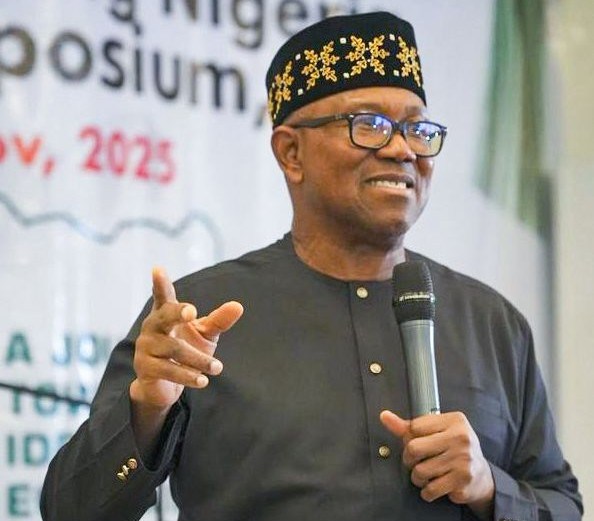
The ruling All Progressives Congress (APC) has taken a swipe at former presidential candidate of the Labour Party, Peter Obi, following his recent resignation from the African Democratic Congress (ADC), accusing him of lacking commitment to building political institutions.
In a statement posted on X on Sunday, the APC’s National Publicity Secretary, Felix Morka, described Obi as a “political rolling stone,” alleging that the former Anambra State governor has consistently avoided staying within parties to strengthen them through challenging periods.
Morka argued that Obi’s political trajectory—from the All Progressives Grand Alliance (APGA) to the Peoples Democratic Party (PDP), the Labour Party (LP), and most recently the ADC—suggests a pattern of seeking what he termed “easy pathways” to presidential nominations without engaging in internal party contests.
“He appears unwilling to remain and build any political platform through its difficult phases, preferring instead to move on in search of a ready-made structure,” Morka said, adding that Obi harbours ambitions of securing a presidential ticket “on a platter of gold.”
The APC spokesperson further characterised Obi as a “political drifter,” intensifying the ruling party’s criticism amid ongoing political realignments ahead of the 2027 general elections.
Obi, however, had earlier defended his decision to exit the ADC, citing deepening internal crises, factional disputes and what he described as a “toxic political environment” within the party. In a statement announcing his resignation, the former governor said the situation had become a distraction from addressing pressing national challenges.
He clarified that his decision was not driven by personal differences with prominent figures in the party, including former Senate President David Mark and former Vice President Atiku Abubakar, both of whom he said he holds in high regard.
Obi also dismissed suggestions that he is desperate for political office, reiterating that his primary focus remains on promoting good governance, economic reform and improved living standards for Nigerians. He maintained that his political engagements are guided by principles rather than personal ambition.
The exchange underscores growing tensions within Nigeria’s political landscape, as parties and key figures begin early positioning and alliance-building ahead of the next electoral cycle. Analysts note that Obi’s next political move—and whether he aligns with an existing platform or backs a new coalition—could significantly influence opposition dynamics in the run-up to 2027.