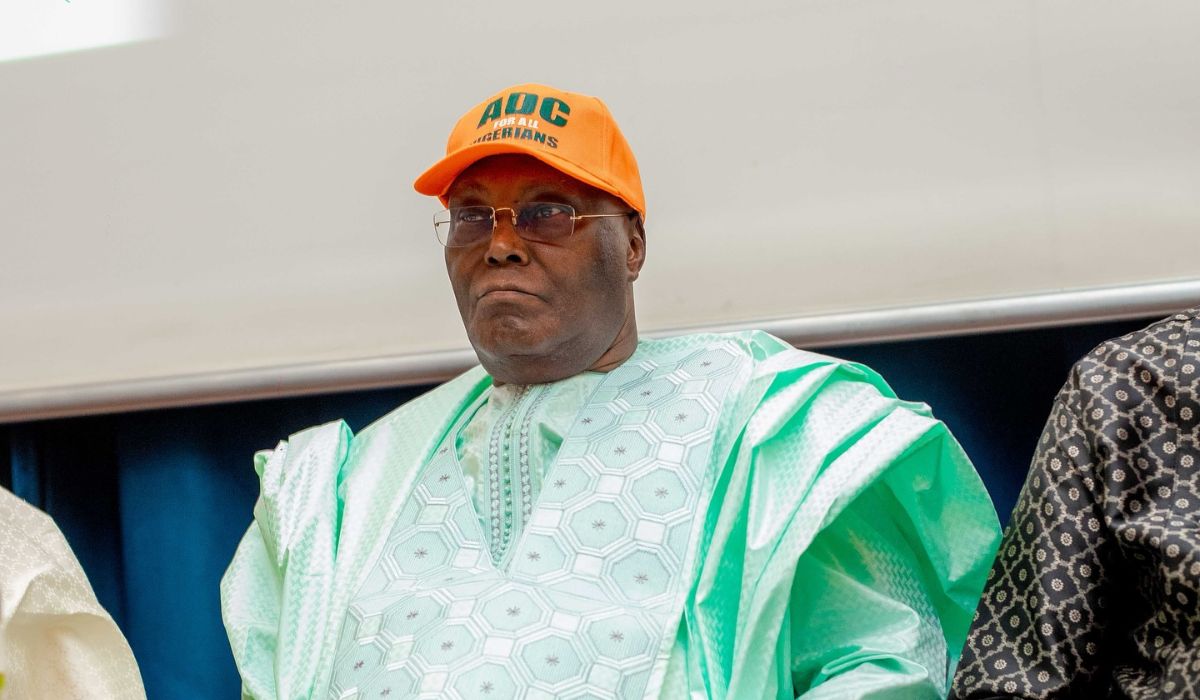
Photo: Alhaji Atiku Abubakar
By Daniel Kanu
Former Vice President and presidential candidate of the African Democratic Congress (ADC), Atiku Abubakar, has instituted a fresh legal challenge against President Bola Ahmed Tinubu, asking the Federal High Court in Abuja to disqualify him from contesting the 2027 presidential election.
Atiku personally appeared at the registry of the Federal High Court in Abuja on Friday, where he deposed to an affidavit in support of the suit challenging Tinubu’s eligibility to seek re-election.
The case centres on allegations concerning the authenticity of a National Youth Service Corps (NYSC) discharge certificate allegedly submitted by Tinubu to the Independent National Electoral Commission (INEC).
Atiku and the ADC are asking the court to determine whether Tinubu and his political party, the All Progressives Congress (APC), should be disqualified from participating in the 2027 presidential election if the allegations are established.
At the heart of the suit is Section 137(1)(j) of the Nigerian Constitution, which provides that a person is not qualified for election as President if he has presented a forged certificate to INEC.
According to Atiku’s affidavit, the NYSC discharge certificate allegedly submitted to INEC bears the name “Tinubu Bola Adekunle”, rather than “Bola Ahmed Tinubu.” The plaintiffs contend that the certificate was not obtained by the President and allege that the same document was submitted in connection with the 2027 presidential election.
The former vice president has also asked INEC to produce President Tinubu’s Form CF001 submitted in connection with the 2023 and 2027 presidential elections. Atiku said he had previously applied for certified true copies of the relevant documents but had not received a response when the legal processes were prepared.
The suit also raises constitutional questions over provisions of the Electoral Act 2026 which, according to the plaintiffs, restrict challenges to a candidate’s qualification at the pre-election stage.
Atiku and the ADC argue that provisions of an Act of the National Assembly cannot override an express constitutional provision, particularly Section 137(1)(j), which deals with presidential qualification.
Explaining his decision to personally swear to the affidavit, Atiku said the matter was too fundamental to be treated casually, stressing that he had put his name and oath behind the allegations presented before the court.
The legal action marks a fresh confrontation between Atiku and Tinubu ahead of the 2027 presidential election and could potentially open another major legal battle over the eligibility of the incumbent president to seek a second term.
Tinubu, the APC and INEC have been joined as defendants in the suit. The allegations contained in Atiku’s case remain claims to be determined by the court, and no finding of wrongdoing has been made against the President at this stage.
The court’s eventual determination could have significant implications for the 2027 presidential contest, particularly if it addresses the constitutional relationship between presidential qualification, electoral law and the power of political opponents to challenge a candidate’s eligibility before an election.