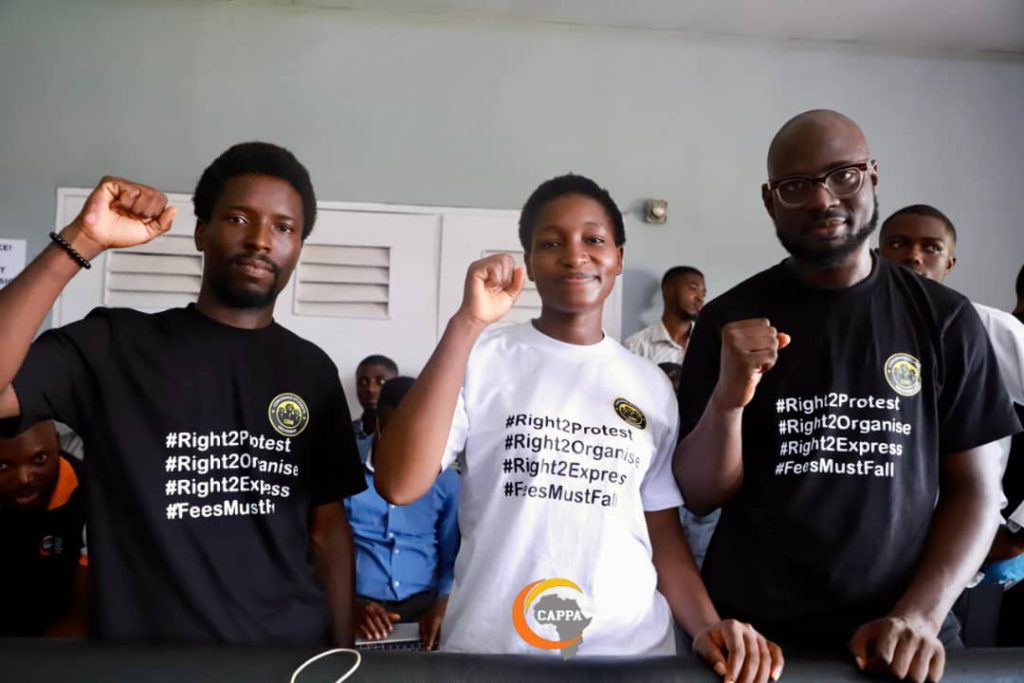
Photo: Zikora Ibeh, CAPPA’s Assistant Executive Director
By Mandy Park
Corporate Accountability and Public Participation Africa (CAPPA) has rejected the Federal Government’s approved concession of King’s College, Lagos, to the King’s College Old Boys’ Association (KCOBA), describing the arrangement as an abdication of the government’s responsibility to fund and manage public education.
The organisation urged the government to use the two-week suspension of the arrangement to cancel it entirely, rather than amend the signed Memorandum of Understanding and proceed with its implementation.
The Federal Government approved the concession in July, while KCOBA announced a N100 billion endowment fund to finance infrastructure renewal, teacher development, digital technology, scholarships and students’ welfare. Following protests by workers and parents, implementation was suspended and a seven-member committee constituted to review the agreement.
CAPPA said the temporary suspension did not resolve the fundamental problem of transferring the management and governance of a publicly owned national institution to a private association. It dismissed the government’s argument that the arrangement did not amount to privatisation because legal ownership of the school would remain with the state.
According to the organisation, public ownership becomes increasingly hollow when the government transfers operational control, institutional governance and decision-making powers to a private body.
Established in 1909, King’s College is one of Nigeria’s oldest secondary schools and an important part of the Federal Unity College system. CAPPA said Unity Schools were intended to bring children from different regions, ethnic groups, religions and social backgrounds into shared institutions while expanding access to quality public education.
Despite deteriorating infrastructure and rising school-related charges, King’s College and other Unity Schools remain comparatively accessible to working-class and low-income families. This distinguishes them from many private schools that have proliferated as public education has been systematically underfunded and commercialised.
CAPPA’s Assistant Executive Director, Zikora Ibeh, said the deterioration of public schools should spur increased public investment rather than provide an excuse for transferring their management.
’’Government cannot neglect public schools until their infrastructure and learning environments deteriorate, only to present concession as the sole means of rescuing them. The condition of King’s College reflects inadequate public investment and weak administration,” Ibeh said.
CAPPA noted that the Federal Government’s 2026 executive budget proposal allocated about N3.52 trillion to education, representing approximately 6.1 per cent of the proposed national budget. It said this remained inadequate for a country contending with dilapidated schools, overcrowded classrooms, shortages of teachers, weak sanitation systems and millions of children without access to quality education.
At a time when federally collected revenues and tax receipts have risen substantially, CAPPA argued that increased public income should translate into greater investment in education and other essential services.
The organisation stressed that King’s College is a federal institution and a national public asset whose infrastructural and administrative challenges should be addressed through adequate budgetary allocations, transparent expenditure and accountable public management. These challenges must not be exploited to justify the government’s gradual withdrawal from public education.
It warned that concession cannot become a substitute for public funding or an escape route from the Federal Government’s responsibility to provide accessible and quality education.
CAPPA linked the arrangement to a broader pattern in which governments weaken public institutions and subsequently present private participation as the remedy. It cited the increasing commercialisation of essential services and infrastructure, including water systems in Lagos, where concession plans and public-private partnerships threaten to place services that sustain everyday life under commercial control.
The organisation said Nigerians already provide their own water, electricity, security, healthcare and education while continuing to pay taxes. A government that collects more revenue, it argued, cannot continue transferring its basic responsibilities to private bodies.
“If King’s College is concessioned today, which Unity School will follow tomorrow? If schools, water systems, hospitals and other essential services are steadily transferred to private managers, what precisely will remain of the government’s social responsibility?” Ibeh said.
CAPPA acknowledged that KCOBA could play an important role in restoring the school without assuming managerial control. It said the association could renovate classrooms and hostels, equip laboratories and libraries, provide scholarships, support teachers and contribute to an independently administered endowment fund.
Such support, the organisation insisted, must supplement public funding rather than replace it or confer governance rights over the school. It urged KCOBA to also use its influence to demand adequate education funding and accountability from the government.
As immediate measures, CAPPA called on the Federal Government to cancel the signed MoU and commission an independent assessment of the school’s infrastructure, staffing and learning needs. The findings should form the basis of a costed rehabilitation plan funded through the federal budget, with clear deadlines and publicly reported expenditure.
The organisation also proposed a public oversight mechanism comprising representatives of the Ministry of Education, teachers, workers, parents, students, alumni and independent education experts. It said all rehabilitation contracts, allocations and project reports should be published, while progress should be independently audited.
Beyond King’s College, CAPPA demanded a properly funded national renewal programme for all Unity Schools to prevent government intervention from being determined by the wealth or political influence of individual alumni associations.
The organisation commended the Association of Senior Civil Servants of Nigeria, the Nigeria Union of Teachers and the Trade Union Congress for opposing the concession. It urged them, alongside the Nigeria Labour Congress, Parent-Teacher Associations, students, alumni and members of the public, to remain firm until the arrangement is cancelled.
CAPPA maintained that public education is a public good and a fundamental responsibility of government, which must fund, protect and administer it in the interest of all Nigerians.