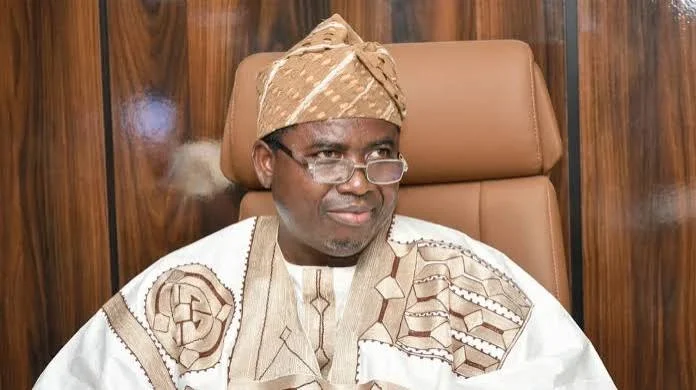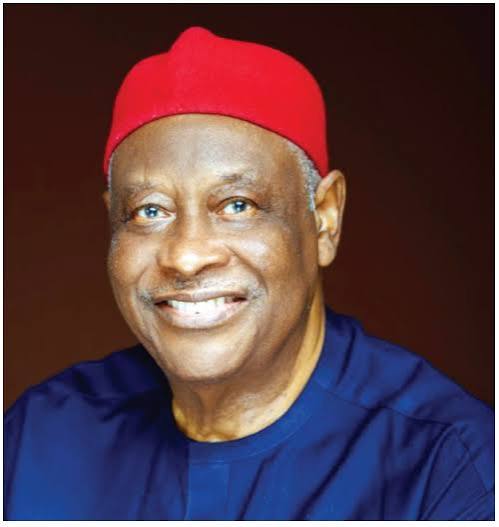
Photo: Chief Ralph Obioha
By Mandy Park
Chief Ralph Obioha, a prominent pro-democracy activist, businessman, politician and former member of the House of Representatives, is dead.
Obioha, who was a founding member and former chieftain of the National Democratic Coalition, NADECO, died on Saturday, October 3, 2026, at the age of 80.
His death was announced by his son, Chima Obioha, on behalf of the family in a statement issued in Enugu.
The family described the late Obioha, also known as Okpuruisizuruoha II of Arondizuogu, as a patriot, elder statesman, political leader and businessman whose life was devoted to family, public service and the development of Nigeria.
The cause of his death was not disclosed.
The family said, “Many Nigerians knew Chief Obioha as a patriot, elder statesman, political leader and businessman.
“Indeed, his very eventful life spanned various business sectors and the Nigerian political and socio-economic space. He was deeply committed to Nigeria’s progress and the ideals of service, leadership and nation-building.
“His was a respected voice in the land, and he was a firm believer in Nigeria’s enormous potential.”
The family added that his death had left an “immeasurable void”, but said it found comfort in the life he lived, the people he touched and the legacy of service he left behind.
It thanked Nigerians for their prayers and condolence messages, while requesting privacy as the family mourns the deceased.
Details of his memorial and funeral arrangements, according to the family, would be announced later.
Obioha became prominent nationally during Nigeria’s turbulent political period of the 1990s, particularly following the annulment of the June 12, 1993 presidential election.
As a leading member of NADECO, he was involved in the campaign for the restoration of democratic rule and the validation of the mandate believed to have been won by the late Chief MKO Abiola.
Following the military crackdown on pro-democracy activists during the regime of the late General Sani Abacha, Obioha operated from the United States and Canada, where he participated in efforts to internationalise the struggle against military rule.
He was also among the pro-democracy figures present at the historic Epetedo declaration in Lagos on June 11, 1994, when Abiola publicly declared himself the lawful President of Nigeria following the annulment of the June 12 election.
Obioha later recounted the personal cost of the pro-democracy struggle, including the loss of some of his business interests during the military era.
His role in the June 12 struggle was recognised in 2026 when he was listed among Nigerians selected for national honours for their contributions to the pro-democracy movement. Reports at the time said he declined the honour, citing concerns about the state of democracy, insecurity and the continued detention of Indigenous People of Biafra leader, Nnamdi Kanu.
Before becoming prominent in the pro-democracy movement, Obioha had been active in partisan politics and public service.
He served as a member of the House of Representatives during the Second Republic, between 1979 and 1983.
He later established the Justice Party, which participated in the 2003 presidential election and fielded Reverend Chris Okotie as its presidential candidate.
Obioha was also involved in the affairs of Ohanaeze Ndigbo and served as chairman of its Caretaker Committee.
His political career and public interventions continued to span several decades, with the late elder statesman frequently commenting on democracy, national development, restructuring and issues affecting the South-East.
Beyond politics, Obioha was a major businessman whose interests cut across several sectors of the Nigerian economy.
He was associated with First African Trust Bank, FATBank, as well as interests in brewing, vegetable oil production, cement bagging and hospitality.
Reports on his business career said some of his enterprises were adversely affected after he fled Nigeria during the military crackdown on NADECO activists.
Obioha himself had recalled that his involvement in the pro-democracy struggle came with significant personal and financial sacrifices.
The family said Obioha was not only known for his public activities but was also a devoted husband, father, grandfather, brother and friend.
It described him as a man remembered for his kindness, strength, humour, generosity, faith and devotion to his family.
His death has attracted reports of condolences from across political and social circles, particularly among those associated with Nigeria’s pro-democracy movement.
With his death, the pro-democracy community has lost one of the figures associated with the struggle that eventually contributed to Nigeria’s return to democratic rule in 1999.
Funeral and memorial arrangements are expected to be announced by the family in due course.
Possible headline alternatives:
Ex-NADECO chieftain Ralph Obioha dies at 80
June 12 struggle loses veteran, Ralph Obioha dies at 80
Former lawmaker, NADECO leader Ralph Obioha dies
Ralph Obioha, ex-NADECO leader, dies at 80
Pro-democracy activist, ex-lawmaker Ralph Obioha dies
NADECO loses founding member, Ralph Obioha at 80