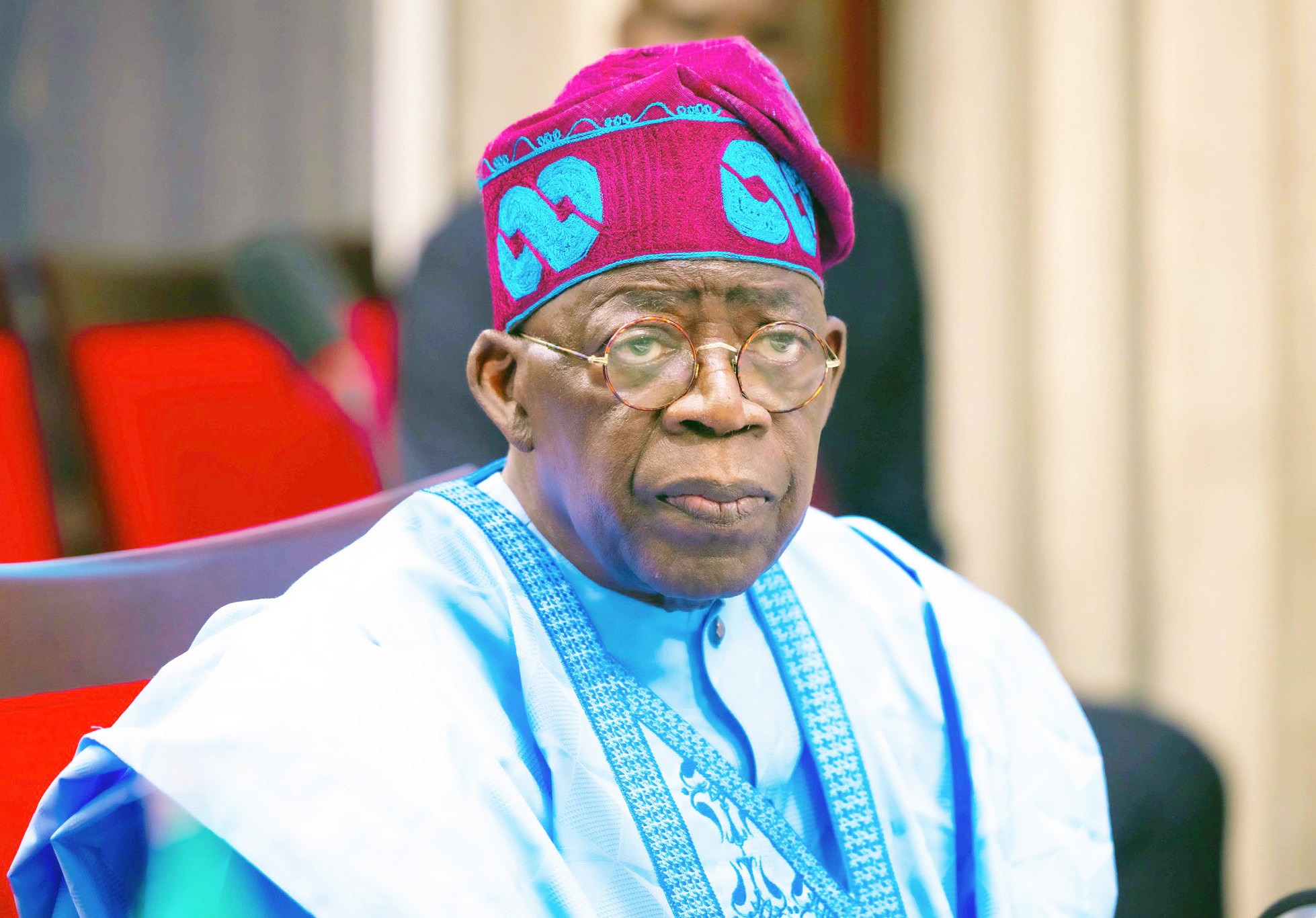
Photo: President Tinubu
By: Daniel Kanu
A commentator, John Adesogan, has warned that President Bola Tinubu’s possible re-election in 2027 could expose Nigerians to further economic hardship, citing concerns over electricity subsidies, petrol prices, taxation, food costs and insecurity.
Adesogan, in a commentary titled Seven Problems Every Nigerian Might Face If Tinubu Returns in 2027, raised the alarm that the continuation of the administration’s economic policies could increase the financial burden on households and businesses already grappling with the rising cost of living.
He listed the proposed phase-out of electricity subsidies, possible increases in petrol prices, a five per cent surcharge on fossil fuel products, rising food prices, worsening insecurity, the implementation of new tax laws and additional charges on imported vehicles among the issues Nigerians should watch ahead of the 2027 general election.
The commentator said his position was not motivated by party loyalty or personal animosity towards the President, adding that his assessment was based on the economic realities confronting ordinary Nigerians.
According to him, the consequences of government policies affect citizens irrespective of their political affiliations, ethnic backgrounds or religious beliefs.
On electricity, Adesogan expressed concern over the Federal Government’s plan to phase out power-sector subsidies from 2027, warning that the move could increase electricity bills if the government failed to introduce adequate measures to protect low-income consumers.
Recall that the Minister of Power, Joseph Tegbe, had announced plans to phase out electricity subsidies as part of efforts to address the sector’s financial challenges and establish a more sustainable funding structure.
Adesogan argued that any additional increase in electricity costs could place considerable pressure on households and businesses, particularly small-scale enterprises that depend on electricity to operate.
He also raised concerns about petrol prices following the removal of the petrol subsidy in May 2023.
According to him, further increases in the cost of petrol could worsen transportation expenses, raise the cost of doing business and make essential goods and services less affordable.
He warned that Nigerians could face additional pressure if rising fuel prices coincided with higher electricity bills and increased taxation.
The commentator also drew attention to the five per cent surcharge on chargeable fossil fuel products provided for under the Nigeria Tax Act 2025.
He explained that a five per cent charge on a qualifying fuel purchase of N10,000 would amount to N500, bringing the total to N10,500.
The implementation and scope of the surcharge therefore depend on the applicable legal and administrative provisions.
Adesogan said the potential additional cost would be significant for motorists, transport operators and businesses that rely heavily on petroleum products.
He argued that higher fuel-related expenses could trigger a chain reaction across the economy, particularly in the transportation and distribution of goods.
On food prices, he said the relationship between transportation costs, production expenses and the prices of agricultural commodities meant that any further increase in fuel prices could worsen the cost-of-living crisis.
He expressed concern that households whose incomes had remained relatively stagnant would struggle to cope with rising expenditure on food, transportation, electricity and other necessities.
Adesogan added that the situation could be particularly difficult for low-income earners, pensioners, unemployed youths and small-business owners.
He called for policies capable of improving purchasing power, expanding employment opportunities and reducing the cost of essential goods and services.
The commentator also expressed concern over insecurity, including kidnapping, banditry, terrorism and attacks on communities across different parts of the country.
He argued that persistent insecurity threatened lives, livelihoods and economic activities, while undermining public confidence in the government’s ability to protect citizens.
He warned that economic hardship, unemployment and declining opportunities could compound existing social challenges.
Adesogan urged the Federal Government to strengthen security operations, improve intelligence gathering and address the conditions that allow armed groups and criminal networks to operate.
On taxation, he criticised the prospect of additional financial obligations for workers and businesses, arguing that excessive or poorly implemented tax measures could place pressure on struggling enterprises and discourage investment.
Nigeria’s new tax framework, introduced under the 2025 tax laws, took effect in stages, with the Nigeria Tax Act commencing on January 1, 2026.
The new personal income tax structure is progressive, with applicable rates ranging from zero to 25 per cent across different taxable income bands after relevant reliefs and exemptions.
Adesogan nevertheless called for tax policies that would balance the government’s revenue needs with the capacity of citizens and businesses to pay.
He also raised concerns about additional charges on imported vehicles, warning that higher importation and clearance costs could make cars more expensive for Nigerians.
He said the combined effect of rising living costs and additional financial obligations could make it more difficult for households to acquire essential assets and maintain their standard of living.
The commentator urged Nigerians to assess political parties and candidates based on their policies, records and capacity to address the country’s challenges rather than ethnic, religious or partisan considerations.
He maintained that citizens had the right to support candidates of their choice but should also scrutinise the potential consequences of their electoral decisions.
Adesogan said political leaders should be regarded as public servants accountable to the electorate rather than individuals entitled to unquestioning loyalty.
He called on Nigerians to consider issues such as economic management, security, employment, taxation and access to essential services when making their choices in the 2027 general election.
He added that the country needed leadership capable of improving living standards, strengthening public institutions and creating opportunities for citizens to prosper.
Nigeria’s next general election is expected to provide an opportunity for voters to assess the Tinubu administration’s record since taking office in May 2023, including its economic reforms, security policies and efforts to address the rising cost of living.
While supporters of the administration have defended its reforms as necessary to address longstanding structural weaknesses in the economy, critics have questioned the pace of implementation and the hardship experienced by households and businesses.
The debate is expected to remain central to political discussions as parties and prospective candidates position themselves ahead of the 2027 polls.