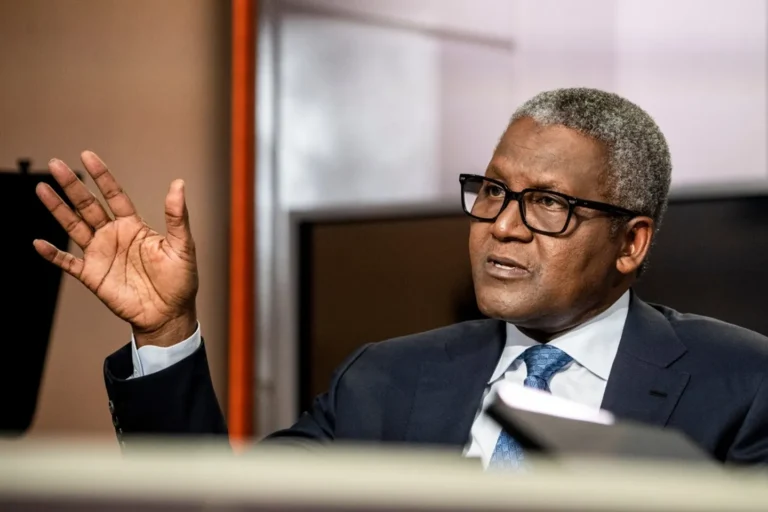
PHOTO: Dr Philips Nto
By: Daniel Nkemdi
The lingering promotion dispute involving Dr Philips Nto at the Michael Okpara University of Agriculture, Umudike raises fundamental questions about fairness, due process, and the protection of academic rights in Nigeria’s university system.
Dr Nto, Director of the Agribusiness Incubation Centre and a former Commissioner for Finance and Economic Planning in Abia State, has been battling since 2021 for the release of his promotion to the rank of Professor.
His case has unfortunately degenerated into what appears to be a prolonged institutional standoff, one that threatens not only his professional future but also the integrity of established academic procedures.
At the heart of the controversy is the interpretation of the university’s Conditions of Service.
Dr Nto maintains that his leave of absence was governed by the 2003 conditions of service, renewed annually, and therefore cannot be subjected retroactively to the 2017 version.
Legal reasoning generally frowns upon the retroactive application of regulations unless expressly stated.
If indeed the university’s legal adviser has offered an opinion that the 2017 provisions cannot apply to his case retrospectively, then that view deserves serious consideration rather than dismissal on partisan grounds.
It is troubling that after reportedly appearing before the Governing Council multiple times—ten consecutive sittings—his promotion has neither been approved nor formally rejected with clear reasons. Due process demands closure.
A candidate who has been assessed at both Associate Professor and Professor levels, with files submitted separately, is entitled to a definitive decision.
Indefinite delay in administrative matters can amount to constructive denial.
Even more concerning are allegations of bias, nepotism, and vendetta.
Dr Nto has accused the Pro-Chancellor and Chairman of Council, Comrade Fidelis Edeh, of sitting on a committee recommendation in his favour.
He has also questioned the role of the local chapter of the Academic Staff Union of Universities (ASUU), alleging an “unholy alliance” designed to frustrate his career progression.
While such claims are serious and require objective investigation, the broader principle remains clear: academic promotions must be guided strictly by merit, documented assessment, and extant regulations—not personalities, politics, or perceived loyalties.
Dr Nto’s critics argue that he seeks to leapfrog from Senior Lecturer to Professor without passing through Associate Professor.
However, he insists he was duly assessed for both ranks and that the practice of considering separate files is not alien to Nigerian universities.
If this is accurate, then the issue is not ambition, but administrative fairness.
The university system thrives when scholarship is rewarded and competence recognised.
It weakens when internal mechanisms are exhausted without resolution, forcing academics to seek external intervention.
That Dr Nto has appealed to President Bola Ahmed Tinubu suggests a breakdown of confidence in internal processes.
The President, as Visitor to federal universities, has both moral and statutory authority to ensure that governing councils operate within the law and in the spirit of justice.
Intervention does not mean imposing outcomes; it means ensuring that processes are transparent, lawful, and free of undue suppression.
Likewise, the performing, peoples’ Governor of Abia State, Dr. Alex Otti, though not directly in charge of the federal institution, can lend his voice to the call for fairness and due process.
When an academic with a track record of public service and scholarly contribution raises concerns about injustice, silence from leaders can be interpreted as indifference.
Dr Philips Nto is widely regarded as a seasoned academic and administrator. He is known to stand tall on competence.
If he has met the stipulated criteria for promotion, he deserves elevation.
If he has not, he deserves a clear, reasoned rejection grounded in documented standards—not indefinite delay or character attacks.
Nigeria’s universities must not become arenas for intimidation or suppression. They are citadels of knowledge, debate, and meritocracy.
An academic star should be encouraged to shine brighter, not dimmed by administrative gridlock or personal disputes.
Justice in this matter is not merely about one man’s promotion.
It is about preserving confidence in the university system, protecting academic rights, and ensuring that hard work and competence are duly rewarded.
Even the respected Vice Chancellor of the institution, Professor Maduebibisi Iwe had dismissed all allegations raised against Dr Nto, by the Council Chairman, insisting that there was no academic encumbrance to Nto’s promotion.
Dr Nto should not be intimidated. His years of scholarship and service should speak louder than politics.
If merit is on his side, then fairness must prevail—and it must prevail now.