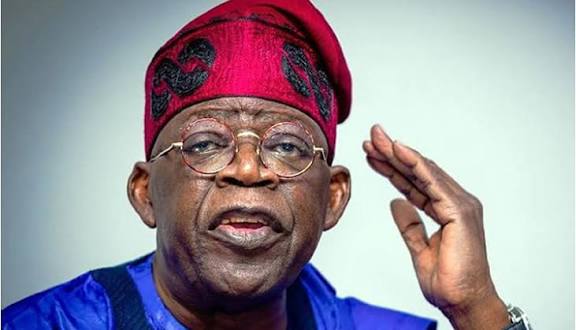
Photo: President Bola Tinubu
By: Bayo Obalende
In politics, defections are neither new nor unusual. Across Nigeria’s democratic history, politicians have crossed party lines in search of ideological alignment, electoral advantage, or sheer survival.
But in Osun East senatorial district of Osun State, a recent wave of defections is stirring more than the usual ripple—it is generating a deepening crisis of confidence within the All Progressives Congress (APC), one that party stakeholders fear could spiral into electoral backlash if not carefully managed.
At the heart of the unfolding tension are four high-profile defectors: Senator Francis Adenigba Fadahunsi and three members of the House of Representatives—Omorin Emmanuel Olusanya, Oluwole Oke, and Ajilesoro Taofeek Abimbola.
Until a few months ago, all four were members of the Peoples Democratic Party (PDP). Within the last three months, they defected to the All Progressives Congress (APC), a move that initially appeared to strengthen the ruling party’s prospects in the zone.
However, what should have been a strategic gain is fast becoming a source of internal discord.
Osun East, comprising key political blocs such as Ijesaland and Ife axis, has long been a battleground of influence, loyalty, and political legacy. The APC, despite its national dominance, has had to work hard over the years to build and sustain its grassroots structures in the area—often relying on loyalists who stayed through difficult electoral cycles.
The entry of the four defectors—each a sitting lawmaker with established political networks—was initially welcomed by many as a boost to the APC’s electoral strength.
Yet, the goodwill that greeted their arrival appears to be rapidly eroding.
The reason is not merely their defection, but what followed.
Reports from within the party indicate that the defectors are allegedly laying claim to automatic tickets for the next election cycle, citing assurances purportedly linked to President Bola Ahmed Tinubu.
The claim, whether factual or speculative, has sent shockwaves through the APC’s existing structure in Osun East.
For many long-standing members, the implication is stark: that years of loyalty, sacrifice, and political investment could be swept aside in favor of newcomers.
Within APC circles in Osun East, a recurring sentiment is one of betrayal—though not necessarily directed at the defectors themselves, but at what many perceive as a system that may be rewarding opportunism over loyalty.
Party stalwarts, some of whom have remained with the APC and its predecessor parties for over two decades, argue that they endured political marginalization, funded party activities, and built structures when victory was far from guaranteed. For them, the sudden prominence of new entrants raises uncomfortable questions.
“If politics is about consistency and loyalty, then what message are we sending?” one party member asked rhetorically during a recent stakeholder discussion in the zone.
The concern is not that the defectors joined the APC—indeed, many acknowledge that political parties benefit from expansion. Rather, it is the perception that these new entrants may be fast-tracked into positions of dominance, potentially displacing those who laid the groundwork.
Perhaps the most combustible element in the unfolding situation is the repeated invocation of President Tinubu’s name by the defectors and their supporters.
Within political circles in Osun East, it is widely alleged that the four lawmakers are presenting their ambitions as having the tacit or explicit backing of the President Whether these claims are accurate remains unclear, but their impact is undeniable.
In Nigerian politics, proximity to power—real or perceived—can shape outcomes as much as formal structures. The suggestion that the President may have endorsed certain candidates, even indirectly, creates a psychological shift within party ranks. It can discourage potential aspirants, weaken internal competition, and foster resentment.
Yet, many APC members in the zone find it difficult to reconcile such claims with the political philosophy associated with President Tinubu, widely regarded as a proponent of internal democracy and strategic coalition-building.
“The President we know believes in building people and structures over time,” another party insider noted. “So, it is hard to believe he would support anything that undermines loyal party members.”
Compounding the uncertainty is speculation about the role of key party leaders in Osun State, including former governor Gboyega Oyetola. Some party members fear that if the perceived arrangement involving the defectors has the backing of influential figures within the state, it could deepen divisions.
However, there is little concrete evidence to confirm such involvement, leaving room for speculation and mistrust to thrive.
Local APC leaders, caught between welcoming new entrants and protecting the interests of long-standing members, appear to be navigating a delicate balancing act. Open opposition to the defectors could be interpreted as disloyalty to the party’s expansion strategy, while silence risks alienating grassroots supporters.
The result is a leadership vacuum of sorts—where uncertainty prevails, and clear direction is lacking.
Another dimension of the crisis is the perceived financial advantage of the defectors. As incumbent lawmakers, they are believed to possess significant resources, which they are reportedly deploying to consolidate their positions within the APC.
For older members who have invested personal funds over the years to sustain party activities, this development adds another layer of frustration.
The fear is that financial muscle, rather than ideological commitment or party loyalty, may become the determining factor in candidate selection.
This dynamic is not unique to Osun East, but its impact is particularly pronounced in a context where internal cohesion is already fragile.
History offers ample evidence that internal party conflicts can have devastating electoral consequences. From defections to parallel primaries and protest votes, unresolved disputes often translate into weakened performance at the polls.
In Osun East, the stakes are especially high. The APC is not only seeking to consolidate its gains but also to position itself strongly ahead of future elections. However, the current tension threatens to undermine these objectives.
Disgruntled members, feeling sidelined or betrayed, may choose to withdraw their support—or worse, actively work against the party. In tightly contested constituencies, such actions can be decisive.
Moreover, the perception that the party rewards latecomers over loyalists could damage its credibility among voters who value consistency and integrity.
Ironically, the crisis within the APC is unfolding against the backdrop of a weakened opposition. The Peoples Democratic Party, from which the defectors emerged, is widely perceived to be struggling in Osun East.
This weakness partly explains the wave of defections. For the lawmakers, the APC offers a more viable platform for re-election.
Yet, political observers caution against underestimating the PDP. A divided APC could inadvertently create an opening for the opposition to regroup and exploit internal fractures.
In politics, strength is not only about numbers but also about unity.
Amid the growing unease, many party members are looking toward President Tinubu for clarity and reassurance. As the leader of the APC at the national level, his stance—real or perceived—carries significant weight.
Stakeholders argue that a clear statement from the President could help dispel rumors, restore confidence, and reaffirm the party’s commitment to fairness and internal democracy.
They also suggest that if there are indeed arrangements to accommodate the defectors, alternative avenues—such as appointments or advisory roles—could be explored, rather than displacing existing aspirants.
“The party must grow, but it must grow in a way that carries everyone along,” a senior APC member remarked.
The situation in Osun East reflects a broader challenge facing political parties in Nigeria: how to balance expansion with internal stability.
Defections can strengthen a party’s electoral base, but they must be managed carefully to avoid alienating core supporters. Integration, rather than imposition, is key.
For the APC, the task is particularly delicate. As the ruling party, it attracts politicians seeking opportunity, but it must also maintain the trust of those who built it.
As the next election cycle approaches, the unfolding drama in Osun East serves as a critical test for the APC’s leadership at both state and national levels.
Will the party prioritize inclusivity and fairness, or will perceptions of favoritism and imposition take root? Can it integrate new entrants without undermining its existing base? And crucially, will it address the concerns of its members before they translate into electoral consequences?
The answers to these questions will not only shape the APC’s fortunes in Osun East but also offer insights into its broader approach to party management.
For now, the district remains in a state of suspense—its political future hanging in the balance, and its party faithful waiting for signals from the top.
In politics, as in life, perception can be as powerful as reality. And in Osun East, the perception of a brewing crisis may well become a self-fulfilling prophecy if not urgently addressed.