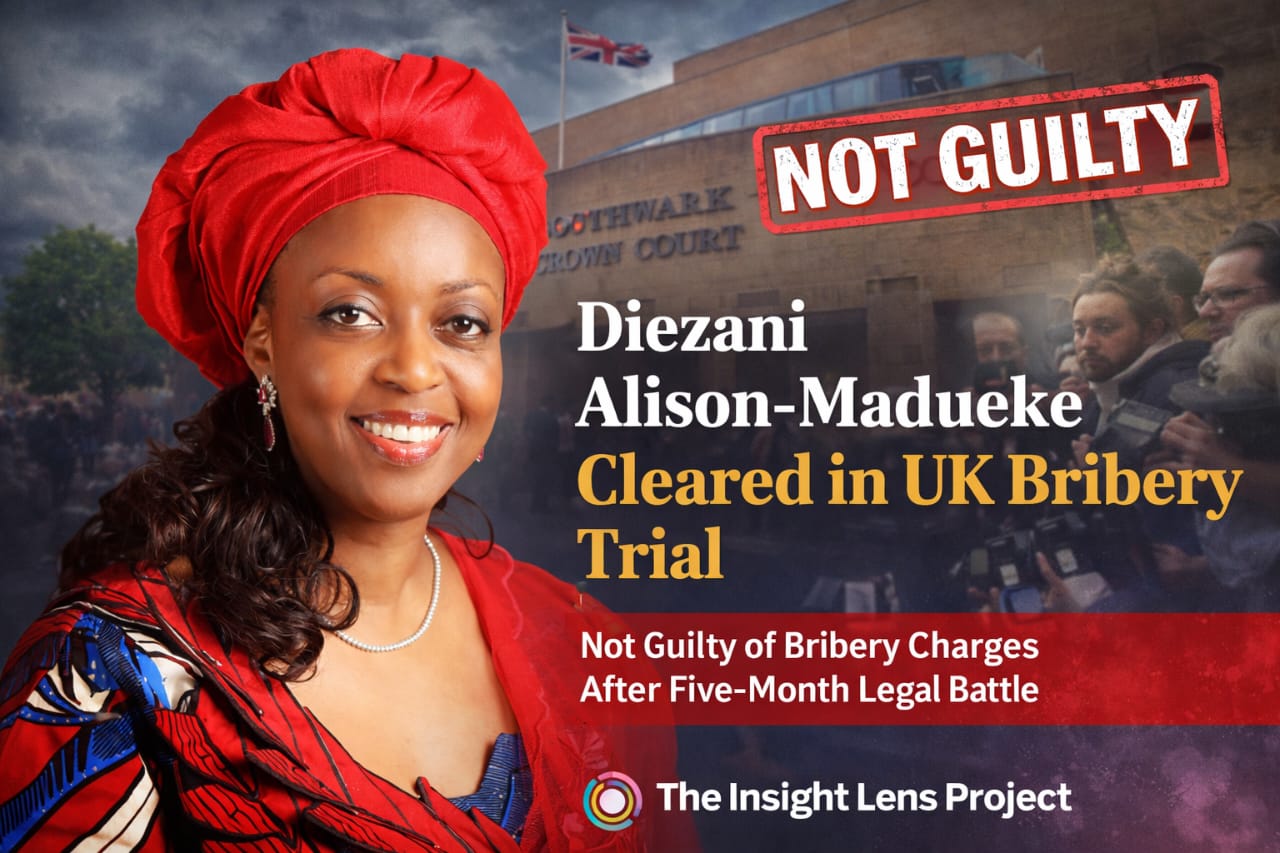
Photo: Diezani Alison-Madueke
Insightprojectphoto
By: Mandy Park
Former Minister of Petroleum Resources, Diezani Alison-Madueke, has been acquitted of all bribery-related charges brought against her in the United Kingdom, bringing to a close a high-profile criminal trial that attracted significant attention in both Nigeria and abroad.
A jury at Southwark Crown Court in London returned unanimous not-guilty verdicts on six counts after more than 46 hours of deliberations.
The charges comprised five counts of accepting bribes and one count of conspiracy to commit bribery.
The trial, which lasted approximately five months, focused on allegations that Alison-Madueke received luxury benefits from businessmen seeking influence in Nigeria’s oil and gas industry during her tenure as petroleum minister between 2010 and 2015 under the administration of former President Goodluck Jonathan.
British prosecutors alleged that the former minister benefited from luxury shopping trips, high-end accommodation, and expenditures on properties in the United Kingdom.
They argued that these benefits were provided by individuals connected to Nigeria’s petroleum sector in exchange for preferential access and favourable treatment in the award and administration of oil-related opportunities.
Among the issues raised during the proceedings were allegations involving millions of pounds spent on luxury goods, property renovations and other expenses allegedly linked to Nigerian businessman Kolawole Aluko and his company, Tenka Limited.
However, Alison-Madueke consistently denied all allegations. Her legal team argued that prosecutors had failed to establish a direct connection between the alleged benefits and any official acts performed by her while in office.
The defence also challenged assertions regarding the extent of her authority over the awarding of oil contracts and licences, maintaining that decisions within the sector involved multiple government institutions and regulatory processes.
The acquittal marks a significant development in one of the most prominent international corruption cases involving a former Nigerian public official. Legal analysts note, however, that the verdict applies only to the criminal charges considered by the UK court and does not automatically affect other ongoing legal matters.
Several asset recovery proceedings linked to funds allegedly connected to Alison-Madueke remain active in different jurisdictions, while anti-corruption agencies in Nigeria, including the Economic and Financial Crimes Commission (EFCC), have previously pursued separate investigations and forfeiture actions involving properties and assets allegedly tied to the former minister.
Alison-Madueke, who served as Petroleum Minister from 2010 to 2015 and was also the first female president of the Organization of the Petroleum Exporting Countries, has remained a central figure in discussions surrounding governance, transparency and accountability in Nigeria’s oil sector for more than a decade.
The verdict has generated mixed reactions. Supporters of the former minister have described the acquittal as a vindication after years of legal scrutiny, while critics maintain that broader concerns about transparency and management of Nigeria’s petroleum resources during the period remain subjects of public interest and policy debate.
With the conclusion of the UK criminal proceedings, attention is expected to shift to any remaining civil, regulatory and asset-recovery cases connected to the long-running investigations.