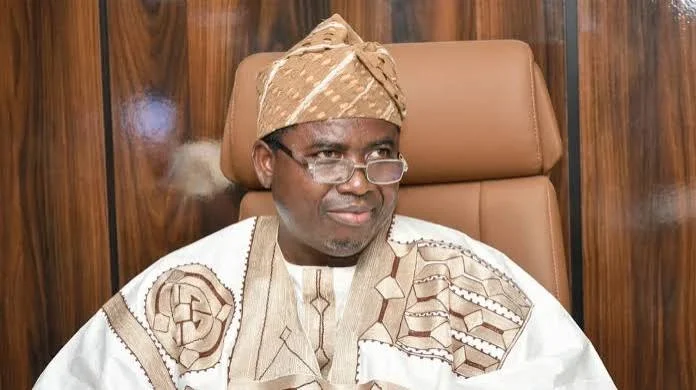
Photo: Prof Amupitan
By: Mandy Park
The Independent National Electoral Commission has come under intense criticism from the ruling All Progressives Congress and opposition parties over suspected artificial intelligence-generated photographs discovered in the preliminary voters’ register published on its website.
The APC, African Democratic Congress, Nigerian Democratic Congress and Peoples Democratic Party have demanded explanations from the commission, with the ADC calling for the resignation of INEC Chairman, while other parties have urged an independent investigation and a comprehensive audit of the voters’ database.
The controversy, which erupted on social media, has raised fresh concerns about the credibility of the electoral register barely three months before the January 16, 2027 general election.
The parties warned that the inclusion of fabricated identities, if established, could compromise the integrity of the electoral process and undermine public confidence in the commission.
Although INEC has acknowledged the concerns and commenced an investigation, the parties insist that the commission must explain how the suspicious photographs found their way into the database, the number of affected records and whether Permanent Voter Cards have been issued against such entries.
They also want the commission to disclose the measures being taken to prevent a recurrence before the final certification of the voters’ register.
The APC National Chairman, Nentawe Yilwatda, said INEC had serious questions to answer, calling for an independent and transparent investigation into the alleged irregularities.
Yilwatda, who spoke through his Special Adviser on Media and Information Strategy, Abimbola Tooki, cautioned against blaming opposition parties or other political actors without credible evidence.
He maintained that protecting the integrity of the electoral process should take precedence over partisan considerations.
“I won’t accuse the opposition, or any political party, without credible evidence. Electoral integrity is too important to be reduced to speculation or partisan finger-pointing,” he said.
The APC chairman said the investigation should establish who introduced the suspicious photographs, how they entered the database and whether the commission’s existing verification procedures were compromised.
He stressed that INEC owed Nigerians verifiable explanations before the December 15, 2026 deadline for the final certification of the register.
Yilwatda, however, expressed confidence in the commission’s ability to conduct credible elections, describing the controversy as an opportunity for it to demonstrate the effectiveness of its verification and correction mechanisms.
He also warned that the growing sophistication of artificial intelligence could pose serious threats to electoral integrity, particularly through fabricated videos, cloned voices, manipulated information and fictitious election results.
The ADC, however, adopted a more confrontational position, demanding accountability from the commission’s leadership.
The party’s Director of Strategic Communication, Phrank Shaibu, said the credibility of INEC and its chairman was at stake, insisting that the preliminary status of the voters’ register did not excuse the commission from explaining the alleged irregularities.
“A preliminary register is not a licence for carelessness,” Shaibu declared.
He demanded that INEC disclose the number of affected voter records, the origin of the questionable photographs, whether PVCs had been issued against the entries and the officials or individuals responsible for any established breaches.
While acknowledging that the presence of suspected AI-generated photographs did not automatically establish an attempt to manipulate the 2027 elections, Shaibu warned that the development exposed vulnerabilities that could be exploited to create fictitious voter identities, compromise electoral records and spread disinformation.
He challenged the INEC chairman to restore public confidence through a transparent investigation and the publication of a verifiable voters’ register or resign.
“The INEC chairman must restore confidence through a transparent investigation and a verifiable voters’ register. If he cannot guarantee that, he should resign,” he said.
Shaibu added that the commission required a comprehensive institutional overhaul if investigations established systemic failures or complicity in the alleged manipulation of voter records.
Similarly, the National Leader of the NDC, Senator Henry Seriake Dickson, described the development as a national embarrassment, warning that doubts over the authenticity of voter records could undermine the credibility of the entire electoral process.
Dickson expressed concern over INEC’s announcement that Nigeria had approximately 103 million registered voters, insisting that Nigerians deserved to know whether the figures represented genuine and eligible voters or included fictitious and duplicated identities.
“The principle of garbage in, garbage out applies here. If the underlying data are unreliable, the credibility of the electoral process could be undermined,” he said.
The former Bayelsa State governor urged INEC to move beyond general assurances and provide verifiable information about the affected records, the extent of the alleged irregularities and the measures being taken to correct them.
He also called on Nigerians to take advantage of the public display of the preliminary voters’ register to scrutinise entries in their communities and report suspicious names, photographs and other discrepancies to the appropriate authorities.
The PDP, on its part, acknowledged INEC’s decision to investigate the complaints but warned that Nigerians would not accept technical failures as an excuse for any shortcomings capable of undermining the 2027 elections.
The party’s National Publicity Secretary, Jungudo Mohammed, commended the commission for acknowledging the concerns and promising to examine its systems.
He described the response as a potentially encouraging indication that INEC was willing to address identified shortcomings.
“If INEC will own up to this, then it gives us confidence that this INEC is determined to conduct a credible exercise,” Mohammed said.
However, he warned that the commission must ensure that all identified deficiencies were corrected before the elections, stressing that technical failures would not be acceptable as an explanation for any lapses capable of affecting the credibility of the exercise.
“I believe Nigerians will not understand the language of anything called technical glitches in the 2027 elections,” he added.
Meanwhile, a former INEC National Commissioner, Festus Okoye, accused the commission of undermining public confidence through its handling of the preliminary voters’ register, even before the controversy over the suspicious photographs emerged.
Okoye alleged that INEC failed to display the register online within the period prescribed by law and only did so after public pressure mounted.
He said the development had reinforced public suspicions about the commission’s transparency.
“This further fuelled the perception that the commission had something to hide,” he said.
Citing Sections 19 and 9(6) of the Electoral Act, 2026, Okoye argued that the public display of the voters’ register was a statutory obligation and not an administrative privilege that INEC could exercise at its discretion.
“A regulator that disregards the law risks undermining its own credibility,” he warned.
The former commissioner also alleged that attempts to compromise the voters’ register were not new, claiming that some political actors had previously enlisted the cooperation of registration officers to manipulate voter records during registration exercises.
He disclosed that the ongoing Continuous Voter Registration exercise had recorded 10,772,421 registrations, stressing the need for the commission to identify suspicious entries and hold those responsible accountable.
Okoye urged INEC to investigate registration officers suspected of involvement in electoral fraud and refer them, alongside their alleged sponsors, to law enforcement agencies for prosecution where sufficient evidence of criminal conduct existed.
INEC has acknowledged the public concerns over the questionable photographs and commenced an investigation, assuring Nigerians that any identified irregularities would be addressed before the final voters’ register is certified.
However, with the December 15 certification deadline approaching, the commission faces mounting pressure to establish the source and extent of the suspected irregularities, demonstrate the effectiveness of its verification mechanisms and convince political parties and Nigerians that only genuine and eligible voters will be included in the register for the 2027 general election.