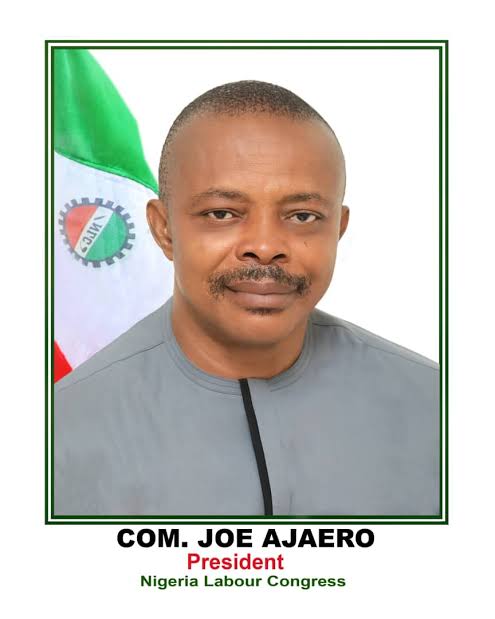
PHOTO: Mr Peter Obi
By: Daniel Kanu
Truth be told, I have been amazed by Mr Peter Obi’s growing and massive influence in Nigerian politics today.
What surprises me most is that he keeps rising despite intense and virulent attacks from political rivals, especially the ruling All Progressives Congress (APC), and its array of paid agents, propagandists, and hatchet aides.
Obi, despite all attempts to intimidate and malign him, has remained Nigeria’s unbowed voice.
His popularity has continued to outlast attacks and every calculated effort to weaken him.
The former Anambra State governor and former presidential candidate of the Labour Party (LP) has, unarguably, become a central figure in Nigeria’s political contest ahead of 2027.
At the end of 2025, Obi formally defected from the Labour Party to the African Democratic Congress (ADC), signalling a fresh strategic alignment ahead of the general elections.
His defection sent shockwaves through the polity and has already triggered a massive influx of new members into the ADC across several states.
In Anambra State, for instance, reports indicate that the party chairman confirmed a sharp surge in membership following Obi’s entry.
The Peter Obi phenomenon represents the rise of relentless popularity — a political journey from that of a reform-minded governor to a major presidential contender.
It is a rise that defies traditional Nigerian political narratives.
In the 2023 presidential election, although the Independent National Electoral Commission (INEC) officially placed him third behind President Bola Tinubu and former Vice President Atiku Abubakar, Nigerians know the outcome did not reflect the true popular will of the masses. This perception has cemented Obi’s status as a symbolic winner in the hearts of millions of Nigerians at home and in the diaspora.
Youth and urban voters, in particular, rallied behind the “Obi-Datti” ticket as an embodiment of change.
What is striking is that, despite this officially recorded third position, Obi’s popularity — largely organic — continues to broaden in leaps and bounds. This phenomenon is rooted in several key factors.
One of the strongest pillars of Obi’s support is the widespread perception of personal integrity and clean governance. Unlike many of his contemporaries in Nigerian politics, Obi has not been credibly linked to any corruption scandals involving looting or personal enrichment.
Throughout his political career, notably as governor of Anambra State, he earned respect for prudent financial management, the regular payment of civil servants’ salaries, massive road construction, infrastructure development delivery and for leaving substantial funds in the state treasury upon exit.
Independent observers, former aides, and widespread public commentary affirm that he ran a demonstrably clean administration anchored on fiscal discipline and transparency.
No credible court record links Obi to any looting of public funds.
This clean image stands in stark contrast to the prevailing belief among Nigerians that corruption has become endemic among political elites.
For many voters, Obi’s perceived honesty is not mere political branding; it is a genuine differentiator that underpins trust.
Obi’s appeal also transcends ethnicity, religion and region. He has consciously positioned himself as a voice for accountability, economic competence, and responsible leadership — themes that resonate strongly with Nigerians frustrated by stagflation, insecurity, and persistent governance failures.
In speeches at his defection event and on subsequent platforms, Obi has continued to warn against what he describes as the “looting of the nation into poverty,” advocating structural reforms to revive the economy and strengthen democratic institutions.
Closely tied to Obi’s personal brand of politics is the Obidient Movement and its deep grassroots reach.
The Obidient Movement — a massive, decentralised network of supporters across Nigeria and beyond— continues to expand daily. The movement has sustained momentum beyond formal party structures, transforming what began as a campaign base into a nationwide socio-political identity. It has become a mass movement.
Even as Obi’s new political home, the ADC, experiences internal debates, including disagreements over nomination strategies, the Obidient Movement remains vocal in its belief that Obi’s leadership represents a generational and ideological shift from the old political order.
Ironically, persistent political attacks have become a source of sympathy for Obi’s continued rise.
Perhaps paradoxically, the intensity of attacks from the ruling APC and other rivals has further boosted Obi’s appeal among many voters. In Nigeria’s current political climate, being perceived as the target of partisan vilification often enhances a politician’s outsider credentials — especially when such attacks are seen as unjust or smear-driven.
The APC has accused Obi of misleading Nigerians through pessimistic critiques of governance under the current administration.
However, these attacks have largely failed to damage his standing among key segments of the electorate.
Instead, they reinforce the narrative that he poses a serious threat to the entrenched political establishment.
There is no controversy today over the fact that Obi enjoys cross-regional and inter-demographic support.
Unlike many politicians whose bases are heavily regionalised, Obi’s support cuts across ethnic and demographic lines.
His messaging on economic inclusion, production over consumption, competence for good governance, and youth empowerment resonates with urban professionals, civil servants, traders, students, diasporans, and other groups who feel excluded by Nigeria’s political elite.
This breadth of appeal was evident in the 2023 election results, where the Labour Party recorded strong performances in several states of the federation.
Obi’s sustained engagement with these constituencies keeps him relevant in national discourse and underscores that his influence is neither fleeting nor nostalgic.
His acceptance remains largely organic.
Obi’s journey from reform-oriented governor to national political force underscores a critical truth about Nigerian politics: popularity does not derive solely from official positions or institutional backing, but from sustained trust, perceived integrity, and resonance with public aspirations.
As he navigates the next phase of his political life within the ADC and beyond, his influence is likely to remain anchored in these foundational elements — making him not just a candidate, but a symbol of alternative leadership for majority of Nigerians.
Obi’s continuing rise is expected to translate into electoral victory in 2027 if votes truly count. Many Nigerians have vowed to closely guard their ballots to ensure that the votes must count.
As 2027 draws nearer, Obi’s star continues to rise on the strength of a narrative that transcends traditional political orthodoxies.
Obi has become a movement beyond the ballot
As one colleague once wrote about Obi:
“I swear, there is a mystery that only the heavens know about Okwute — Obi the Rock.
“His aura defies most human explanation.
Anytime I find myself in his presence, I marvel when he speaks; everything feels different, almost divine.
“He is indeed an extraordinary being. His persona transcends normal standards of character and humility.
I see a special individual, guarded and prepared by the universe.
“This is a movie I am still waiting to see the end of.”