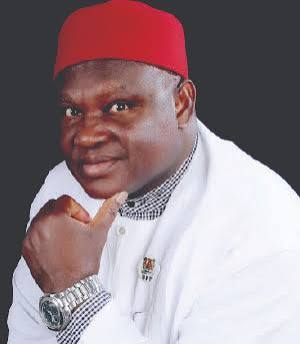
Photo: Chief Chekwas Okorie
By: Daniel Kanu
In a country where many politicians fade quietly into retirement after decades in public life, Chief Chekwas Okorie has chosen a different path. At an age when many of his contemporaries now enjoy the comfort of political retirement, the veteran statesman and strategist remains deeply committed to the struggle for justice, inclusion, and political relevance for Ndigbo within the Nigerian federation.
For decades, Okorie has remained one of the most visible ideological voices from the South-East. He is not merely a politician seeking relevance; he is one of the few political actors in modern Nigerian history who invested his personal energy, reputation, and political capital in building enduring political platforms for his people.
His name is permanently etched in Nigeria’s democratic evolution as the founder of the All Progressives Grand Alliance, popularly known as APGA — a party that became more than a political structure.
For millions of Igbos, APGA represented identity, political awakening, and a vehicle for self-expression within Nigeria’s democratic space. APGA provided platform for Dim Chukwuemeka Odimegwu Ojukwu (Eze-Igbo Gburugburu) to run for the highest office in the land–The Presidency.
The party produced governors, lawmakers, ministers, and became the dominant political force in parts of the South-East, especially Anambra State.
Beyond APGA, Okorie also played foundational roles in other political movements and parties over the years, proving his unwavering belief that political organization remains critical to the survival and advancement of marginalized groups.
While many politicians build structures merely for personal ambition, Okorie’s interventions were often driven by a broader ideological concern: the place of the Igbo man in Nigeria.
What makes his present efforts particularly remarkable is that they are coming at a time when political fatigue would have been understandable. Yet, rather than withdraw from public engagement, the elder statesman has launched what he describes as perhaps his final major service to his people — the “Igbo Agenda Dialogue Project.”
The initiative is not a political party. It is not an electoral campaign organization. It is a socio-political intervention aimed at rebuilding political consciousness among Ndigbo through dialogue, civic engagement, and strategic coordination.
At the heart of the project lies a troubling reality that Okorie believes many Nigerians are ignoring — the growing political withdrawal and emotional detachment of many Igbo youths from the Nigerian state.
His concerns are not baseless.
He points to declining participation in national institutions, poor involvement in elections, increasing frustration among youths, and a dangerous feeling of alienation.
According to him, the refusal of many Igbo youths to participate in military recruitment, police recruitment, and democratic processes signals something deeper than ordinary political dissatisfaction.
For Okorie, these are warning signs that responsible leaders must not ignore.
His intervention therefore seeks to restore confidence, rebuild bridges, and create constructive engagement instead of confrontation.
Unlike extremists who profit from chaos, Chief Okorie has consistently advocated dialogue, negotiation, and democratic participation.
This is perhaps why many observers consider him one of the few elder statesmen who still commands credibility across ideological divides within the South-East.
His latest advocacy regarding Mazi Nnamdi Kanu further reflects his longstanding belief in political resolution rather than endless hostility. Okorie has repeatedly argued that Kanu’s continued detention remains a deeply emotional issue for many Igbos and that the Federal Government should embrace political dialogue and statesmanship in resolving the matter.
While opinions may differ sharply on Mazi Kanu and the activities of the Indigenous People of Biafra, Okorie’s position has largely centered on reconciliation, de-escalation, and national healing.
He believes suppressing grievances without sincere engagement only deepens resentment and widens distrust.
In many ways, his position echoes the views of several respected Igbo leaders who have called for a political solution instead of a purely legal or security-based approach.
What distinguishes Okorie from many contemporary politicians is consistency. Through military rule, democratic transitions, political betrayals, and shifting alliances, he has remained largely devoted to the question of equity, inclusiveness and fair treatment for Ndigbo.
He has never hidden his belief that the Igbo nation possesses the intellectual capacity, entrepreneurial strength, and patriotic commitment needed to produce a Nigerian president. Yet, rather than preach isolation, he continues to advocate constructive participation within a united Nigeria founded on justice and mutual respect.
That balance is important.
At a time when ethnic distrust and political bitterness continue to threaten national cohesion, voices like Okorie’s remain necessary.
He understands the anger in the South-East, yet he insists that dialogue must prevail over violence. He acknowledges the frustrations of Igbo youths, yet he still believes in democratic engagement rather than political abandonment.
Few men in Nigerian politics can genuinely claim to have sacrificed as much personal comfort and political opportunity for a cause larger than themselves. Okorie’s journey has not always brought him power or reward.
Indeed, many who benefited from structures he helped build moved ahead politically while he remained in the background. Yet he has continued undeterred.
That persistence deserves recognition.
History will likely remember Chief Chekwas Okorie not merely as a politician, but as a political institution — a man who consistently devoted his voice, time, intellect, and organizational strength to the advancement of his people and the stability of Nigeria.
At a stage in life when silence would have been easier, he still chooses advocacy. When withdrawal would have been understandable, he still chooses engagement. And when cynicism threatens to consume public discourse, he still chooses dialogue.
For that enduring commitment to the Igbo cause and to democratic conversation, Chief Chekwas Okorie deserves commendation, respect, and a worthy place among the notable elder statesmen of contemporary Nigeria.