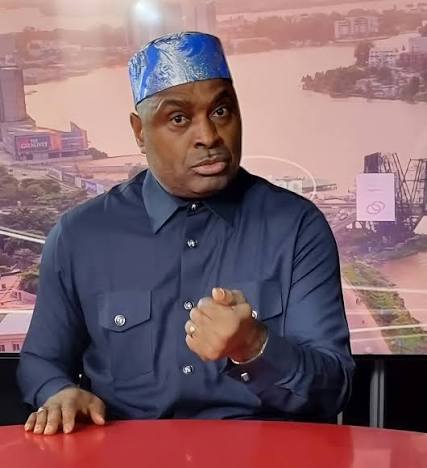
Photo: Kenneth Okonkwo
By: Daniel Kanu
In every political season, disagreements, defections, and shifting alliances are expected. Democracy thrives on divergent opinions and competing interests.
However, what should never become normal is the descent into bitterness, personal attacks, and relentless hostility against individuals simply because political interests no longer align.
This is why the recent public posture of Kenneth Okonkwo toward Peter Obi has become deeply concerning to many Nigerians, especially supporters of the Obi movement.
At almost every opportunity on television interviews and political discussions, Kenneth Okonkwo appears increasingly fixated on criticizing Peter Obi.
The tone, language, and frequency of these attacks suggest something beyond ordinary political disagreement. Many observers are beginning to ask: what exactly did Peter Obi do to deserve such sustained hostility?
Politics should never become a personal vendetta.
If Kenneth Okonkwo has chosen to align politically with Atiku Abubakar, that is entirely within his democratic rights.
Nigeria is a free society, and every citizen is entitled to support any candidate or political platform of their choice. But supporting one politician should not require the constant demonization of another.
Unfortunately, Kenneth’s recent public appearances have painted a picture of a man consumed by resentment toward Peter Obi. Rather than sell the vision of his preferred candidate, he appears more interested in attacking Obi at every turn. That approach is neither constructive nor statesmanlike.
What makes the situation even more troubling is that Peter Obi himself has largely refrained from responding to the provocations. Since leaving the ADC coalition amid internal disputes and litigation concerns, Obi has focused on his political direction and engagements.
Yet, despite this, Kenneth continues to make Obi the center of his political commentary.
This raises important questions.
Why should a man who has moved on politically still occupy so much space in Kenneth Okonkwo’s speeches and media outings?
Why has criticism turned into what many now perceive as open bitterness?
Public figures must understand that repeated attacks can eventually damage their own credibility more than the target they seek to discredit.
Nigerians are watching closely, and many young people who once admired Kenneth Okonkwo for his eloquence and courage are beginning to grow uncomfortable with the increasingly harsh rhetoric.
There is a thin line between political advocacy and political obsession.
Kenneth Okonkwo is undoubtedly a good speaker, but communication loses value when it is constantly driven by anger and hostility. Great political communicators inspire people with ideas, policies, and vision — not endless attacks on opponents.
If he truly believes in Atiku Abubakar’s leadership capacity, then he should devote his energy to promoting Atiku’s plans for Nigeria instead of turning every appearance into an anti-Obi campaign.
Nigerians are more interested in solutions to insecurity, inflation, unemployment, and economic hardship than personal feuds between political actors.
Supporters of Peter Obi also believe he represents hope for millions of Nigerians frustrated by years of failed leadership. To many of them, Obi symbolizes discipline, prudence, and a different political culture.
Whether one agrees with that perception or not, dismissing or insulting those sentiments will only deepen political tensions.
Political maturity demands restraint.
History has shown that leaders and public figures who allow bitterness to dominate their public conduct often diminish their own image over time. Respect is earned not merely through speaking ability, but through composure, dignity, and the ability to disagree without hatred.
Kenneth Okonkwo must therefore exercise caution before public frustration turns admiration into disappointment.
Political relevance built on constant attacks rarely lasts. Nigerians respect politicians and commentators who engage issues intelligently without descending into personal warfare.
This is the time for mature conversations about the future of Nigeria — not emotional outbursts against individuals.
The country is facing enormous challenges, and citizens expect political actors to elevate national discourse.
The focus should be on governance, economic recovery, security, youth empowerment, and national unity. Personal bitterness adds no value to those conversations.
At this stage of his life and career, Kenneth Okonkwo should choose the path of statesmanship over confrontation. At his age Obi was already a governor and billionaire, so Kenneth Okonkwo should be careful as his outburst may mean hunger.
A situation that may even make Atiku, his principal to have a rethink on their relationship.
He should rise above personal grievances, avoid inflammatory remarks, and contribute meaningfully to democratic engagement.
In the end, politics is temporary, but reputation endures.