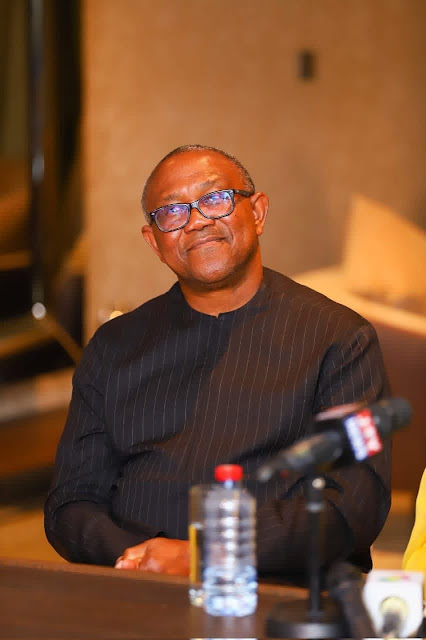
Photo: Mr Peter Obi
By : Mandy Park
The presidential candidate of the Nigeria Democratic Congress (NDC) for the 2027 general election, Peter Obi, has met with Nigerians living in South Africa amid renewed xenophobic tensions and attacks targeting African immigrants, including Nigerians.
Obi’s visit comes against the backdrop of growing concerns over hostility towards foreign nationals in parts of South Africa, where non-state actors have allegedly been involved in attacks, harassment, killings, and destruction of properties belonging to immigrants.
During the visit, Obi also held high-level engagements with South African ministers and political leaders in a move aimed at promoting dialogue, peaceful coexistence, and stronger bilateral relations between Nigeria and South Africa.
In a statement shared on his official social media platforms, Obi disclosed that he first interacted with Nigerians resident in Cape Town before proceeding to meetings with key South African government officials and party leaders.
According to him, the discussions centred on immigration concerns, regional cooperation, unemployment, security challenges, and the increasing tensions affecting African foreigners in South Africa.
“I was able to have meaningful discussions with three South African ministers and political party leaders regarding the ongoing challenges related to immigration, regional collaboration, and fostering peaceful coexistence between our nations,” Obi stated.
The former Anambra State governor said he met with South African Minister of Home Affairs, Leon Schreiber; Minister of Cooperative Governance and Traditional Affairs, Velenkosini Hlabisa; and Minister of Sports, Arts and Culture, Gayton McKenzie.
He described the meetings as “productive and candid,” stressing the need for both Nigeria and South Africa to deepen cooperation and pursue solutions rooted in justice, mutual respect, and the rule of law.
Obi noted that both countries, regarded as major economic and political powers on the African continent, must work together to address the underlying causes of migration, youth unemployment, and social unrest.
He also urged citizens and leaders across Africa to reject violence, hate speech, and provocation, while allowing democratic institutions and lawful processes to handle grievances.
“The progress of Africa hinges on our ability to create unity, foster economic inclusivity, invest in our communities, and uphold the dignity of every African, no matter where they live,” he added.
Xenophobic attacks in South Africa have remained a recurring concern over the years, with several African countries, including Nigeria, repeatedly condemning violence against their citizens.
The attacks have often been linked to economic hardship, unemployment, and competition for opportunities between locals and foreign nationals.
The Nigerian government has in previous years evacuated some Nigerians from South Africa following deadly anti-immigrant violence, while diplomatic efforts between both nations have continued to focus on improving relations and protecting citizens abroad.