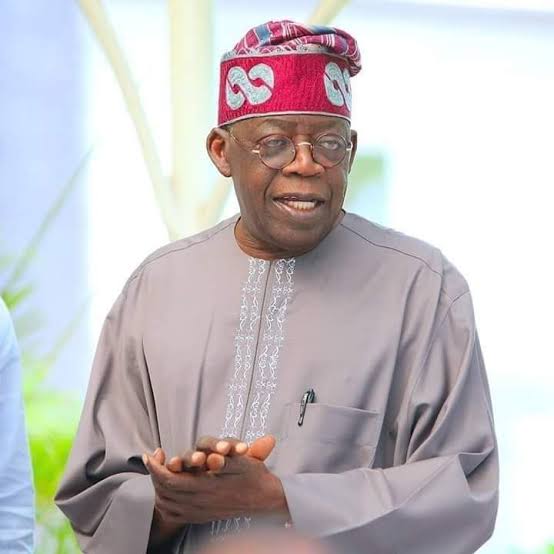
Photo: President Bola Tinubu
By Daniel Kanu
As schools reopen for another academic session across Nigeria, the excitement that normally accompanies the return of children to classrooms is being overshadowed for many families by a more troubling reality — the rising cost of educating a child.
For millions of Nigerian parents, school resumption is no longer simply a matter of buying a few new books, replacing worn-out uniforms and paying school fees.
It has become a major financial undertaking that requires careful planning, borrowing, sacrifice and, in some cases, difficult choices between education and other essential household needs.
From school fees to uniforms, textbooks, writing materials, shoes, bags, transportation, feeding, examination charges and extra-curricular activities, the expenses associated with sending a child to school have continued to multiply.
The challenge is occurring against the backdrop of a broader cost-of-living crisis in which households are also contending with high food prices, housing costs, transportation expenses, electricity bills, healthcare needs and other basic necessities.
For families with several school-age children, the financial pressure can be particularly severe.
A parent with three or four children in different classes may have to raise hundreds of thousands of naira — or considerably more, depending on the type of school — before the children can settle into the new academic session.
And while some parents are able to absorb the increases through higher salaries or additional sources of income, many others are not.
Workers whose salaries have remained relatively stagnant, pensioners, petty traders, artisans, farmers and other people whose incomes fluctuate from month to month are among those facing difficult decisions as they struggle to meet education-related expenses.
For families resumption has become a financial battle
For many parents, the school calendar has effectively become a financial calendar.
The months preceding resumption are often characterised by calculations: how much is available, how much is required, what can be paid immediately and what can be postponed.
A family that has just paid rent may have to turn its attention almost immediately to school fees. Another may be dealing with medical bills or food expenses at the same time that the school sends a reminder for tuition payment.
Some parents have resorted to borrowing from relatives, friends, cooperative societies, salary-advance schemes and informal lenders to meet school expenses.
Others have chosen to pay school fees in instalments where schools permit such arrangements.
For parents in the informal sector, the situation can be even more difficult because their earnings are not fixed.
A trader may have a good week and a poor one the following week. An artisan may have several jobs in one month and very few in another.
A transport operator may see a substantial portion of income consumed by fuel, maintenance and other operating costs.
Yet school fees and other education expenses often come with fixed deadlines.
This mismatch between irregular income and fixed education costs has become a significant source of pressure on households.
One of the major misconceptions about the cost of education is that school fees constitute the entire financial burden.
In reality, tuition is only one component.
A child returning to school may require a new uniform because the previous one has become too small or worn out. There may be a need for new shoes or sandals, socks, a school bag, textbooks, exercise books, stationery, sportswear and other learning materials.
For some families, transportation is another major expense.
Parents who cannot afford to live close to their children’s schools may have to pay for buses, commercial transport or private school transportation services.
The cost becomes even more significant where a family has several children attending schools in different locations.
Then there are additional charges that may not always be obvious at the beginning of the session.
These may include examination fees, computer fees, development levies, lesson charges, extracurricular activities, uniforms for special occasions, school events, practical fees and other contributions.
Although such charges vary from school to school, their cumulative effect can be substantial.
The result is that a school fee bill that initially appears manageable can become considerably larger when all the associated expenses are added.
Nigeria’s education system has a large private-school sector, and millions of families depend on private schools because of concerns about overcrowding, teacher availability, infrastructure, academic standards, proximity and other factors.
But private schools are also businesses facing increasing operating costs.
School proprietors have to pay teachers and administrative staff, maintain buildings, purchase equipment, provide electricity and water, transport students in some cases and cope with rising prices of educational and non-educational materials.
They also face higher costs for rent, fuel, security, internet services, repairs and other operational needs.
Consequently, some school owners argue that increases in school fees are necessary to remain operational and retain teachers.
This creates a difficult situation.
Parents want affordable education, while school proprietors need sufficient revenue to keep their institutions running and provide quality services.
The challenge, therefore, is how to strike a balance between affordability for parents and sustainability for schools.
A school that is forced to operate below its costs may struggle to pay teachers adequately or maintain its facilities. On the other hand, excessive increases in fees can make education inaccessible to families whose incomes cannot keep pace.
The question of school fees cannot be separated from the question of household income.
In July 2024, the Federal Government approved a national minimum wage of N70,000, following negotiations with organised labour.
But the ability of a household to afford education depends not simply on the nominal amount earned but on what remains after food, housing, transportation, electricity, healthcare and other essential expenses have been paid.
For a low-income family, even a relatively modest school-related bill can represent a significant proportion of monthly income.
This is particularly important for households with more than one child.
If a worker earns a fixed salary and has three children, the cost of educating all three cannot be assessed in isolation from the family’s other obligations.
A family cannot spend its entire monthly income on school fees.
It still has to eat, pay rent, travel to work, provide healthcare and meet other basic needs.
That is why the issue of education affordability is also an issue of wages, employment, inflation and household purchasing power.
The wider inflationary environment has also changed the economics of preparing children for school.
The National Bureau of Statistics maintains current Consumer Price Index data, including an August 2026 CPI report published in September 2026.
Whatever the movement in the headline inflation figure at a particular point, families experience the cost of living through the prices they actually encounter in markets and shops.
The price of a pair of children’s shoes, for example, affects a household differently from the price of a loaf of bread or a bag of rice, but all of these expenses compete for the same household income.
When several expenses rise simultaneously, the pressure becomes cumulative.
A parent who spends more on food has less available for school expenses. Higher transport costs reduce disposable income. Increased rent leaves less money for educational materials.
This is why school resumption can become a particularly stressful period for households already operating on tight budgets.
The impact is not uniform across society.
A wealthy household may be able to absorb an increase in school fees without significantly altering its standard of living.
A middle-income family may respond by cutting entertainment, delaying purchases or reducing other discretionary spending.
But for a poor household that majority of Nigerians have become, the same increase can have much more serious consequences.
The family may reduce food consumption, delay healthcare, withdraw children from private schools or move them to cheaper institutions even when they know the school is of low quality.
In the most difficult cases, children may leave school altogether.
This is not merely a theoretical concern.
UNICEF says Nigeria has one of the world’s largest out-of-school populations. Its current education information puts the number of children aged 5–14 who are not in school at about 10.5 million, while noting that economic barriers are among the factors contributing to educational exclusion.
UNICEF has also documented individual cases of children leaving school because their families could no longer afford the costs.
In one 2025 account, a Nigerian girl, Ummul Khultum, described how she dropped out of secondary school after the death of her mother left her father unable to continue paying her school fees.
Such experiences demonstrate that education costs can have consequences that extend beyond one academic session.
Once a child drops out, returning to school may become difficult.
Education may be officially free, but costs remain.
Nigeria’s Universal Basic Education framework provides for free and compulsory basic education.
UNICEF’s September 2026 report on public finance for basic education notes that the UBE Act of 2004 guarantees compulsory, free basic education from primary through junior secondary school.
Yet the reality for many families is more complicated.
Even where tuition is officially free in public basic schools, parents may still have to deal with the cost of uniforms, books, writing materials, transportation, feeding and other school-related needs.
UNICEF has specifically noted that “school fees” and other education-related costs can create barriers for poor households despite the formal commitment to free basic education.
This means that removing tuition alone may not be sufficient to guarantee access.
A child who has no uniform, no books, no transportation and no food may still struggle to attend school regularly.
One of the possible ways of reducing the financial burden on families is to strengthen public education.
Nigeria already has a vast network of public schools, but many schools require additional classrooms, furniture, laboratories, libraries, toilets, water facilities, electricity and learning materials. Most public schools are under pressure.
In densely populated urban communities, existing public schools are overcrowded.
Where parents perceive public schools as inadequate, some feel compelled to enrol their children in private schools even when doing so places considerable pressure on household finances.
The issue is not simply the number of schools but the quality of education provided in them.
Parents are unlikely to move their children from private to public schools merely because tuition is lower if they believe the quality of teaching, discipline, infrastructure or learning outcomes is inadequate.
Truth is that the financial pressure facing families also exists alongside a long-running challenge of public education financing.
A September 2026 UNICEF report on public finance for basic education said Nigeria’s education expenditure as a share of total government spending fell from 9.3 per cent in 2015 to 3.6 per cent in 2023, compared with an international benchmark of 15–20 per cent.
UNICEF has separately observed that education funding has remained below the recommended 15–20 per cent allocation benchmark.
The funding question matters because inadequate public investment can ultimately shift more responsibility to households.
When public schools lack adequate facilities, teachers or learning materials, families who can afford it often turn to private alternatives.
The result can be a two-tier system in which wealthier families have access to better-resourced schools while poorer households are increasingly dependent on under-resourced public institutions.
Another important part of the education debate is that getting children into classrooms is only one part of the challenge.
Children must also learn. Access is not enough.
UNICEF’s September 2026 public-finance report cited learning deficiencies in Nigeria, noting that in 2022, 49 per cent of Primary 3 learners, 67 per cent of Primary 5 learners and 86 per cent of Junior Secondary 2 learners did not reach minimum proficiency in mathematics.
This means that the national conversation should not focus exclusively on how many children are enrolled.
The country must also ask whether those children are acquiring the literacy, numeracy, critical-thinking and other skills necessary for their future.
Parents who make considerable sacrifices to pay school fees reasonably expect their children to receive meaningful educational value in return.
Transportation deserves particular attention because it can become a substantial part of the cost of schooling.
Families living far from schools may spend money every day transporting their children.
For households with multiple children, the expense can be multiplied.
Some parents may therefore choose schools based not only on academic reputation but also on distance from home bearing in mind the cost of fuel pump price.
The increase in transportation costs also affect school attendance.
When transport becomes too expensive, some families may reduce the frequency with which children attend extra lessons or other educational activities.
In rural communities, the problem can be even more severe where schools are far away and roads are poor.
Food is another cost that cannot be ignored.
Children need to eat before leaving home, and many spend several hours in school.
For families already struggling with food costs, providing daily school meals or pocket money can become another burden.
This makes school feeding programmes particularly relevant.
Where properly implemented, school feeding can support attendance while also helping children concentrate in class.
It can also provide an economic benefit to communities if locally produced food is purchased from farmers and small businesses.
The reality is that financial pressure can also push families towards difficult compromises.
Some parents may postpone buying textbooks. Others may purchase second-hand uniforms or shoes. Some may delay payment of school fees until the school begins to insist.
These decisions are understandable responses to economic hardship, but they can have consequences for children’s participation in school.
A child who arrives without required learning materials may find it more difficult to keep up with classmates.
This is why education policy should recognise the full cost of participation rather than concentrating narrowly on tuition.
The cost-of-education debate should also include teachers.
Teachers are central to the quality of education, but they too are affected by the rising cost of living.
Where school proprietors face financial difficulties because parents cannot afford higher fees, they may struggle to increase teachers’ salaries.
Poor remuneration can contribute to teacher turnover and make it difficult for schools to attract and retain experienced professionals.
Thus, the interests of parents and teachers are not necessarily opposed.
Both groups have an interest in a sustainable education system.
Parents need affordable schools, while teachers need decent working conditions and remuneration.
The challenge for policymakers and school owners is to create a system in which both objectives can be accommodated.
Many parents are not necessarily demanding that schools provide education free of charge.
Rather, they want charges to be reasonable, transparent and predictable.
They want to know exactly what they are paying for.
They want schools to distinguish between essential educational expenses and optional charges.
They also want schools to consider the realities of the economy when fixing fees.
One measure that could provide relief is flexible payment.
Allowing parents to pay school fees in two or three instalments, where practical, could make a substantial difference to families whose incomes arrive periodically rather than as a lump sum.
Schools could also provide early-payment plans, sibling discounts or targeted assistance to families facing temporary financial hardship.
Such arrangements would not eliminate the cost of education, but they could make the burden more manageable.
School proprietors also have responsibilities.
They should communicate fee increases early enough to allow parents to plan.
Where increases are unavoidable because of higher operating costs, schools should explain the reasons clearly.
Parents are more likely to understand a fee increase if they can see the connection between the additional payment and improvements in teachers’ welfare, learning materials, infrastructure, security or other services.
Schools should also guard against unnecessary charges that add little educational value.
The goal should be to maintain quality without making schooling unnecessarily expensive.
The government has a larger responsibility because education is not merely a private commodity.
It is a public investment with long-term implications for economic development, social mobility, employment and national stability.
A child who receives a quality education is more likely to acquire the skills needed to participate productively in the economy.
Conversely, children who are denied education because their families cannot afford it may face greater vulnerability to poverty and social exclusion.
Government therefore needs to expand investment in public schools, improve teacher recruitment and training, provide learning materials, rehabilitate dilapidated classrooms and strengthen accountability in education spending.
Public schools must become institutions parents can trust.
There is also a case for linking education policy with social protection.
The poorest families may require direct support to keep children in school.
Cash transfers, scholarships, school feeding, free learning materials and targeted transportation assistance can all help reduce the financial barriers that keep children away from classrooms.
UNICEF’s 2025 annual report provides an example of this approach. It said that education interventions reached more than 1.5 million children in Nigeria in 2025, while cash assistance in Borno and Zamfara reached 11,250 households and benefited about 25,000 children with schooling opportunities.
Such interventions demonstrate that educational access can be strengthened when financial support is targeted at vulnerable households.
The debate over school fees should therefore not be reduced to whether parents can afford a particular school’s bill.
The larger question is what kind of society Nigeria wants to build.
If children from poor families are systematically denied access to quality education, inequality can become entrenched across generations.
A child whose parents cannot afford quality education may grow into an adult with limited employment opportunities. That can affect the next generation as well.
Education is therefore one of the most important mechanisms through which families can break the cycle of poverty.
But education cannot perform that function if the cost of accessing it becomes prohibitive.
The challenge requires cooperation among government, school proprietors, parents, teachers, communities and development partners.
Government must increase and better manage education funding.
School owners must balance operational realities with affordability and transparency.
Parents must plan responsibly and engage schools constructively.
Communities can support vulnerable children through scholarships, educational foundations and other local initiatives.
Civil society organisations can continue to monitor education spending and advocate for children who are excluded from school.
The private sector can also play a greater role through scholarships, infrastructure support, teacher development and other education-focused corporate social responsibility initiatives.
Perhaps the most important test of Nigeria’s education system is not how well it serves families who can afford expensive private schools.
It is whether a child from a poor household can still enter a classroom, receive quality teaching, have access to learning materials and complete basic education without the family being pushed deeper into poverty.
That is the real meaning of affordable education.
Nigeria already has a significant out-of-school challenge. UNICEF estimates that about one in five of the world’s out-of-school children is in Nigeria.
The country cannot afford to allow economic pressures to push even more children away from education.
The problem is particularly urgent because Nigeria’s population is young and growing, meaning the demand for schools, teachers, books, classrooms and other educational resources will continue to increase.
As another academic session begins, the sight of children returning to school should be more than a seasonal event.
It should prompt a national conversation about the affordability, quality and sustainability of education.
For parents, the immediate concern may be how to pay the next school bill.
For schools, it may be how to remain operational in an economy where their own costs are rising.
For teachers, it may be how to earn a decent living while continuing to educate the next generation.
For the government, however, the issue is much bigger.
It is about ensuring that a child’s future is not determined primarily by the financial circumstances of his or her parents.
The rising cost of education is therefore not merely a household problem. It is an economic, social and developmental issue.
Every time a parent struggles to keep a child in school, the country is confronted with a question about the strength of its social contract.
And every time a child drops out because a family can no longer afford the associated costs of schooling, Nigeria loses more than one student’s classroom attendance. It risks losing future skills, productivity and opportunity.
The answer cannot be to tell parents simply to “try harder” or tell school owners to freeze their fees regardless of their operating costs.
There has to be a broader solution.
The government must strengthen public education and improve financing. Schools must operate transparently and responsibly. Parents need flexible payment arrangements and meaningful choices. Vulnerable families need targeted support.
Above all, education must be treated as an investment rather than an expense.
As classrooms reopen across the country, the hope should be that Nigerian children will not only return to school but will remain there, learn effectively and complete their education.
The challenge before Nigeria is clear: how can the country guarantee quality education for every child without making the cost of acquiring that education unbearable for the family?
The answer will determine not only how this academic session unfolds, but also the quality of the Nigeria that today’s schoolchildren will inherit and eventually lead.