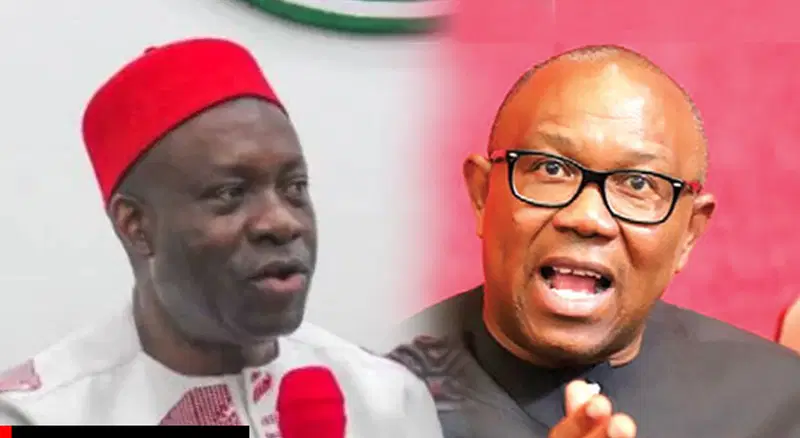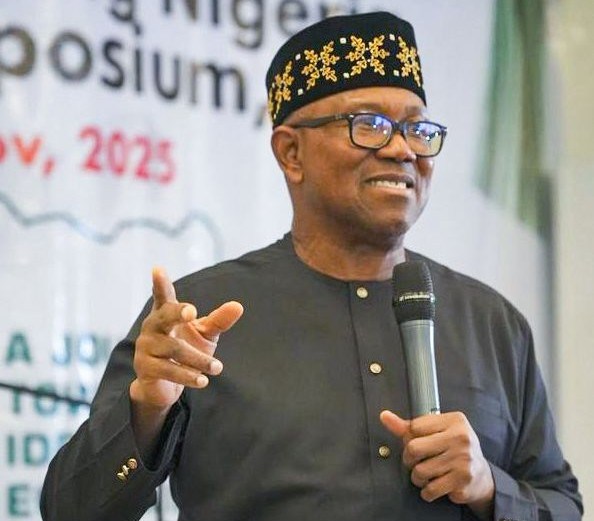
Photo: Mr Peter Obi
Valentine Obienyem
Mr. Peter Obi’s strongest political asset is not simply that he is from Anambra or that he is Igbo. His greatest political capital is the rightful perception – shared by millions of Nigerians – that he possesses an unusually clean record of personal integrity, financial prudence and responsible public administration. Indeed, this reputation has become so formidable that even some of those who once opposed him now speak of him in almost saintly terms.
I remember our last open encounter with Rev. Fr. Prof. Josephat Oguejiofor, my inimitable lecturer in Ethics and, to my mind, one of those priests who represent the finest intellectual tradition of the Catholic priesthood.
Fr. Oguejiofor spoke candidly about his former opposition to Obi when Obi was Governor of Anambra State. He was never a man afraid of his own voice. He told us that he had opposed Obi vehemently. But after years of observing and studying governors across Nigeria, he reached a conclusion that was both simple and devastating. In his words: “I opposed Obi vehemently. However, after I had seen and studied other governors in Nigeria, I came to realise that he is a saint when compared to others.”
The statement is important – not because Peter Obi is a saint; he is not – but because it captures something his detractors have consistently struggled to destroy: the extraordinary public perception of his integrity.
If Obi were merely another politician with an ordinary record, nobody would need to work so hard to reinterpret his past. But when a politician builds a reputation for prudence, restraint and accountability, the easiest way to weaken him is not necessarily to disprove his record, but to drown it in suspicion, distortion and endless repetition.
Suddenly, investments that directly and indirectly created employment for thousands of Anambra people become “next to nothing”. Concessional development financing is presented as though it were the same thing as reckless commercial borrowing. Savings accumulated by a government that avoided the borrowing spree of its contemporaries are subjected to endless insinuation.
And then comes the most astonishing part: the attempt to make the savings disappear altogether.We are talking about a government that, on the figures repeatedly cited in this debate, left more than ₦75 billion and $150 million in savings and investments. Yet the political revisionists would have Nigerians believe that the real problem with Obi was that he somehow did too much with too little – and left behind too much for too little to have been done!
This is where the argument becomes almost comical. If the record were so unimpressive, why the extraordinary effort to rewrite it? If the investments were “next to nothing”, why not simply acknowledge them and demonstrate that they were wasteful? If the savings did not exist, why not produce the records and settle the matter conclusively? And if the financing was ordinary reckless borrowing, why not show the commercial loans, the terms and the corresponding debt burden?
Instead, we are sometimes presented with an extraordinary exercise in political alchemy: savings are turned into liabilities, investments into irrelevancies, concessional financing into ordinary debt, and a record of fiscal restraint into something requiring apology.
This is why Fr. Oguejiofor’s observation remains relevant. He did not arrive at his conclusion because he was an Obi supporter. Quite the contrary. He arrived at it after opposing Obi and then comparing his record with those of other governors. That, to me, is the more interesting testimony.
Obi is not a saint. But if, after studying Nigerian governors, a man who once opposed him could describe him as “a saint when compared to others”, perhaps the people attempting to destroy Obi’s reputation should first explain why that reputation has proved so remarkably difficult to destroy. What a futile chase!