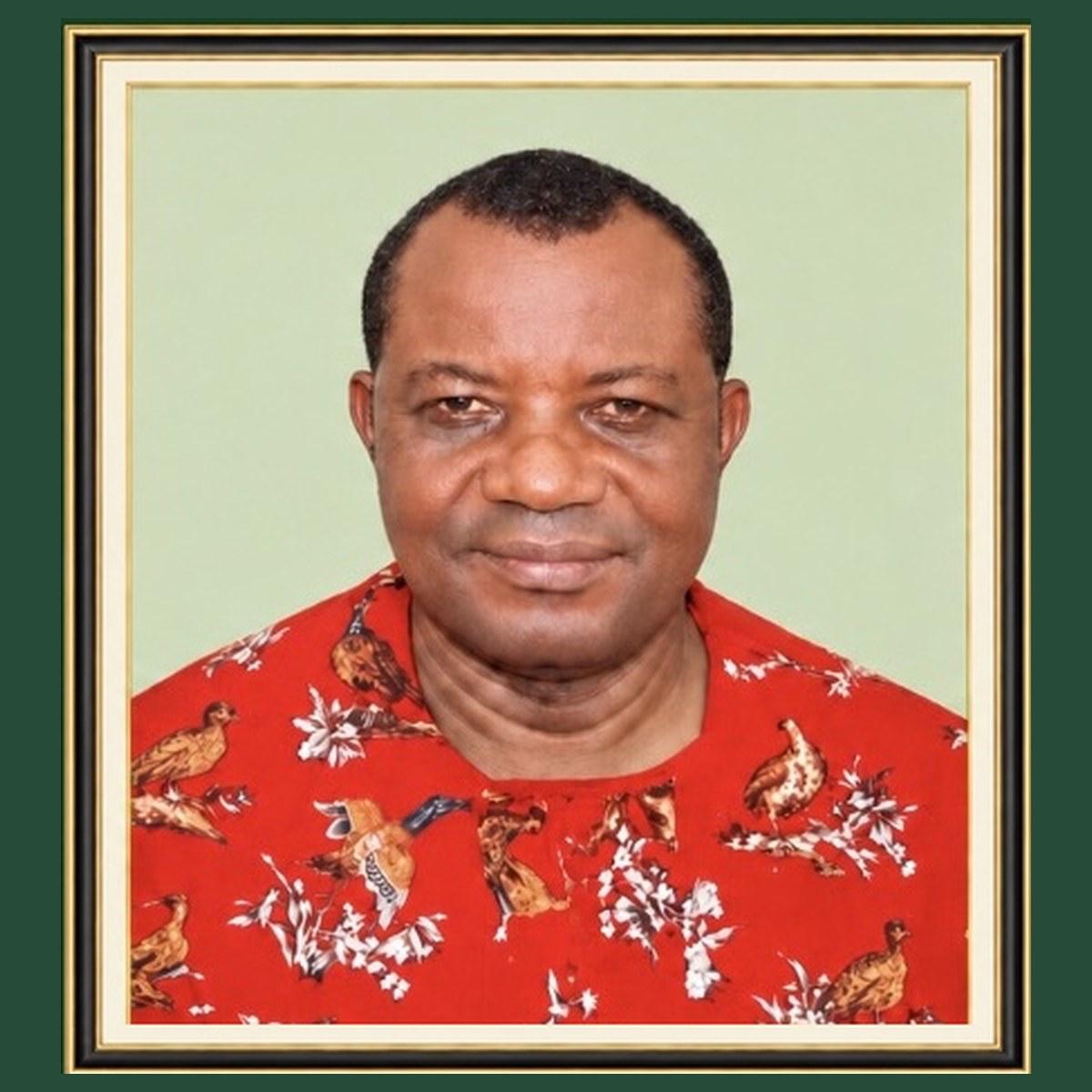
Photo: Late Chief Ogbonnaya Kalu Amah
By Dr. Nnaoke Ufere
“A man’s character is his guardian spirit and his destiny.” So declared Heraclitus, the Greek philosopher, more than two and a half thousand years ago (Diels-Kranz B119).
Few lives give those ancient words such living proof and practical meaning as that of Chief Ogbonnaya Kalu Amah of Ukwuakwu, Ututu. Character governed how he treated people, how he served Ututu and what he was prepared to defend when standing firm meant standing alone. His integrity was the compass he followed, the shield that guarded him and the legacy that now outlives him in our community.
More than 25 people who knew him, including friends, family members, former students and even foes, were interviewed for this account. Their recollections allow us to see the man through the lives he touched and the responsibilities he accepted. They also remind us why his story deserves to be told: Chief Amah showed how much one person’s character can contribute to the progress, opportunities and well-being of an entire community.
Men like Chief Amah are indispensable in our post-character society, where wealth, status and self-aggrandizement command respect regardless of how the wealth was acquired. His life reminds us that character must remain the measure of a person’s worth, and that money cannot make poor character respectable.
In him, Ututu had a son whose decency, integrity, honesty, truthfulness and unwavering commitment to our people often exposed the dark side of our community, revealing the moral decay, dishonesty and decadence that many had long chosen to ignore or had come to accept as normal.
Chief O. K. Amah was a man whose word we trusted. He believed that a good name mattered, that service to Ututu carried a duty of care, and that a man should leave his community better than he found it.
Ask any Ututu person who knew him (and many did), and they will tell you that his word was his bond. When he gave it, you could rely on it. You could make plans on the strength of what he had told you. That dependability gave his word value and made people confident in their dealings with him. A promise from him was a promise kept.
He spoke the truth plainly. His words carried no veil, no riddle, no second meaning waiting to be unearthed and interpreted. What he said was what he meant, and what he meant was what he said. He never hid behind parables, idioms or clever tongue twisters that left his listeners guessing.
Among our people, who prize _ilu okwu_, the proverb, as the crown of eloquence, meaning is often wrapped in layers for the listener to unfold. He chose instead the power of simplicity. He laid his truth bare, direct and unambiguous, so that no one could twist it, doubt it or mistake it.
*A Lived Experience of Courage and Truth Telling*
Chief Amah’s commitment to the truth showed in the way he lived. When Ututu faced problems that required the truth to be told, he spoke up, even when others chose silence.
According to eyewitness accounts shared by interview participants, five courageous occasions tell us much about the kind of man he was.
There was the crisis that began when an Ukwuakwu man killed a man from a neighbouring state on the plantation over land rights to dig for earthworm for fishing. The trouble that followed forced Ukwuakwu (and Obienne) farmers off their farmland and back to the villages. While the Ukwuakwu leaders of the day tried to bury the truth, Chief Amah stood alone and exposed the cover-up.
His stand affirmed that loyalty to Ukwuakwu did not justify concealing wrongdoing or shielding a wrongdoer from accountability. By speaking out, he upheld a moral standard that applied equally to our own people and to outsiders. His duty to the community included confronting wrongdoing within it.
That same refusal to keep quiet showed itself when one of our sons suddenly became wealthy. All of Ututu hailed the young man as _Okenwa Ututu_, but Chief Amah asked the question no one else dared to ask: where did the money come from?
Time proved him right. The wealth came from goods stolen from the wharf. Before long, the money was gone, and the young man returned to the poverty he had once known. Those who had praised him and eaten at his table disappeared, leaving him alone to bear the shame of his fall.
Chief Amah held Ututu’s elites to the same high standard. When a prominent figure committed adultery with the wife of his own clansman and blood relative, the village condemned and ostracized the woman but remained silent about the man’s conduct. Even after she confessed to the affair, no one dared publicly condemn his abominable betrayal of kinship.
Because the man was highly educated and respected, people would not speak against him. But Chief Amah named him publicly and condemned the adultery for the abomination it was. He insisted that no amount of education, wealth or status placed anyone above the customs and moral standards of Ututu. The man’s social standing did not excuse his conduct.
His defence of those standards also extended to the heritage entrusted to us by our ancestors. When religious fanatics rose in Ututu, determined to destroy our shrines and sacred artifacts, our ancestral oracle and our ark of the covenant, others fell silent. They sought to dismantle the traditional institutions that had governed our society for more than two hundred years.
Chief Amah alone stood against their extremism and defended our common heritage. After his death, there was no one to speak as he had spoken. Our shrines were destroyed, and our ancient artifacts were looted. For that desecration, and for the silence that allowed it, Ututu needs atonement.
For Chief Amah, defending our traditions also meant insisting on respect for our elders. On another occasion, a young man who had become rich began insulting the village elders, and no one dared caution him. Chief Amah called him to order. He told him plainly that money gave him no right to insult Ututu elders or abuse our tradition of respect for elders.
When the young man threatened to “teach him a lesson,” Chief Amah looked him straight in the eyes and told him that he had money but lacked character. Money without character, he said, was like a sandcastle: it would not survive when the waves came ashore. His answer left the young man looking foolish and strengthened the village’s resolve to ostracise him.
Where others chose silence, he chose courage to tell the truth. Where others followed the crowd, he stood alone. And each time, history vindicated him.
*Biography and Contributions to Ututu*
Chief O. K. Amah was born on 25 August 1944 in Ukwuakwu, Ututu, the first son among the seven children of Chief and Mrs. Jack Ogbonnaya Kalu Amah.
He began his education at the Church of Scotland Mission School, now Ututu Central Primary School, Amodu, where he obtained his First School Leaving Certificate. He then attended Aggrey Memorial Secondary School, Arochukwu, where he obtained his West African School Certificate. He earned his Grade III certificate at Teachers Training College, MacGregor College, Afikpo, and his Grade II certificate at the Teachers Training College, Uyo. He went on to obtain a National Certificate in Education (NCE) from the institution now known as Alvan Ikoku Federal University of Education, and later completed a Bachelor of Arts in Education (BA Ed.) at the University of Nigeria, Nsukka.
He married the late Elder Comfort Kalu Amah (Ma Amamgbo) of Amaeke, Ututu, one of our community’s most beloved and brilliant daughters. They were blessed with two extraordinary sons: Dr. K. O. Amah (PhD in Accounting), popularly known as Daddy, and the late Master Augustine Kalu Amah. Throughout his years of public service, he remained devoted to his family and loyal to his friends. Those closest to him knew the husband, father and friend behind the public responsibilities.
His life also knew profound sorrow. He lost his beloved son Augustine, one of the hardest losses a father can endure. In the way he bore that grief, those around him saw another kind of courage. He continued to stand. He continued to fulfill his responsibilities. He continued to be present for his family and our community.
*Relentless Educator and Character Builder*
All his life, Chief Amah believed that education without character was incomplete. Knowledge alone, in his view, could make a person capable, but only character could make that person useful to the community. That conviction led him to found Ututu Secondary Commercial School (USCS), where he set out to make character the foundation of learning rather than an afterthought. Without him, USCS would not exist, and many Ututu sons and daughters who benefited from it would have been denied the opportunities they enjoy today.
He understood that opportunity means little if poverty keeps people from taking it. Many students came from subsistence farming families who could not afford school fees. For them, Chief Amah created jobs and employed them within the school and used their wages to pay their fees and other expenses. No willing student was turned away simply for being poor.
For the young men and women of Ututu, the school opened doors that had long been closed. It brought secondary education within reach of many who might otherwise have gone without it, and it gave them discipline, purpose and a foundation for a better future. Many went on to university and into successful careers at home and abroad.
Over the years, USCS has produced some of Ututu’s most accomplished sons and daughters. Its graduates carry with them not only the knowledge they gained there but the values Chief Amah worked so hard to instill. In this way, the benefits of his vision continue to extend across generations.
The establishment of USCS remains one of Chief Amah’s most enduring contributions and legacies to the development of our people.
*Beyond the Classroom*
Chief Amah’s service extended beyond education. He served as Chairman of the Ututu Development Union, Home Branch, and as a leading member of the Eze Ututu in Council.
In support of the Ututu Development Union, he brought together a group of Ututu intellectuals and professionals drawn from every field. It was far more than a social gathering. It was a forum where the best minds of Ututu could examine our community’s needs, exchange ideas and study the best practices for development. Nothing quite like it had existed before. In effect, it was Ututu’s first think tank, and it brought a new seriousness and vision to our development efforts.
Yet the group was never elitist. It did not exist to set its members apart from the community, but to place their knowledge and skills at the service of every Ututu man and woman. Chief Amah understood that expertise means little if it stays in the hands of a few.
Sadly, death cut short both his life and the full realization of that vision. The work he began remains unfinished, and it is a challenge that Ututu’s enlightened sons and daughters have yet to take up.
Ututu has never known a man whose motives were more sincere in addressing Ututu’s needs in education, economic development and character formation. His record of service gives substance to the respect we hold for him.
Theodore Roosevelt’s “*The Man in the Arena*” captures the courage and commitment Chief Amah brought to his work in Ututu:
“*_It is not the critic who counts; not the man who points out how the strong man stumbles or where the doer of deeds could have done them better. The credit belongs to the man who is actually in the arena, whose face is marred by dust and sweat and blood; who strives valiantly; who errs, who comes short again and again, because there is no effort without error and shortcoming; but who does actually strive to do the deeds; who knows the great enthusiasms, the great devotions; who spends himself in a worthy cause; who at the best knows in the end the triumph of high achievement, and who at the worst, if he fails, at least fails while daring greatly, so that his place shall never be with those cold and timid souls who neither know victory nor defeat_*.”
*What Would Chief Amah Do If He Were Alive in Ututu Today?*
These reflections imagine what Chief Amah would say and do, based on his character and record of service. Some who praise his memory would find his words uncomfortable.
1. He would call Ututu’s educated and influential sons and daughters back to community service. He would insist that they commit their money and expertise to well-planned projects and see them through to completion.
2. He would confront the social media vigilantes who hide behind phone screens to abuse, intimidate and silence others. No one should be bullied into silence for expressing a different opinion.
3. He would hold the leaders of UDA, Inyom Ututu and Ututu diaspora organisations, together with Ezeogos and autonomous chiefs, to one standard: Ututu’s collective interests must come before personal gain.
4. He would demand a full public account of federal allocations received by Arochukwu Local Government Area and insist that Ututu receive its fair share of funding, projects and services.
5. He would challenge the fragmentation of Ututu into autonomous communities and demand that we rebuild the unity and political influence these divisions have weakened.
6. He would challenge any arrangement that leaves Ututu with only one ward while smaller communities enjoy greater representation. He would insist on a well-prepared, sustained campaign to secure additional wards.
7. He would press for investment in education, apprenticeships, business support and employment so that our young people can acquire skills, earn a living and support themselves.
8. He would insist that women and young people help set community priorities and have a meaningful say in the decisions that affect their lives.
*The Responsibility Is Now Ours*
To honour Chief Amah, we must accept the responsibilities he took seriously: demanding accountability for public money, defending Ututu’s unity and culture, ensuring that our children receive a sound, practical education, and electing and rewarding men and women of good character. We must support worthwhile community projects, mentor young people and ensure that women have a meaningful voice in decisions.
That responsibility begins with our own conduct. In our homes, businesses, associations and leadership, people must be able to trust our word. We must hold friends, relatives and political allies to the same standards we demand of others. We cannot celebrate his courage while yielding to intimidation or remaining silent about wrongdoing.
Let us also tell Chief Amah’s story to our children. A boy or girl who reads it and says, “Chief Amah is who I want to grow up to be,” gives us another reason to preserve his memory. Our responsibility is to help that generation understand and practise the character we honour in him.
Chief Amah died on 26 April 1998, aged 53. He left Ututu something no title, mansion or luxury car could buy: a good name, earned through service, and the memory of a man whose word could be trusted.
But he will be overlooked no more.